


UNDER THE SURFACE | Why was Michel Rolland so polarising and what is his legacy?
17 April 2026
The sudden death of the man who was, at one stage, the world’s most famous winemaker, felt like the end of an era. So why was Michel Rolland such a lightning rod for debate and how will he be remembered? Guy Woodward, who chronicled his career closely, reflects on his legacy
Back in the early 2000s, when I was editing Decanter magazine, there were a handful of topics that were guaranteed to generate a fevered response from readers. The top three were all loosely related: the price of top-end Bordeaux; the power of Robert Parker; and the influence of Michel Rolland.
As Bordeaux prices rose throughout the decade, so too did the blood pressure of those keen to apportion blame. In their mind, there was an obvious pattern: Chateau X employs Rolland to make its wine; Parker garlands said wine with lavish scores; Château X’s price then increases to similarly inflated levels.
Scores and prices can only go so high, of course, and that limit was reached in 2011 when the bet on the Chinese market being impervious to such price rises backfired spectacularly and the bubble burst. Bordeaux has been paying the price ever since. The subsequent retirement of Parker, along with the wane in fashion for the lush, ripe, oak-influenced style of wine that he favoured, saw Burgundy take over as the media darling and with it a thirst for more nuanced, understated wines.
Rolland’s fondness for the richer, rounder ‘Parkerised’ style led some to claim that all his wines bore those traits, regardless of their provenance
Throughout it all, Rolland continued his prodigious workload, acting as consultant winemaker to a huge range of clients. And while he sold the majority of shares in 2020, his Pomerol-based laboratory, Rolland & Associés, partly run by his wife and two daughters, continues to provide analysis and advice to around 250 estates in Bordeaux and further afield. Rolland himself, however, was less and less in the headlines. His death last month, from a heart attack at the age of 78, seemed to mark the end of an era.
At the height of his powers, Rolland was advising over 150 estates in 14 countries, from the US (Harlan, Staglin, Screaming Eagle) to Italy (Ornellaia), Chile (Casa Lapostolle), Argentina, South Africa, Spain, Croatia, Armenia, India and more. The archetypal ‘flying winemaker’, it was this ubiquity that was the stick his critics used to beat him, claiming he made identikit, international wines to suit the palate of the hugely powerful Parker.
Rolland freely acknowledged the pair’s friendship, even admitting that he owed his first overseas job to Parker, who recommended him to Sonoma winery Simi in 1985. The pair had bonded in 1983 when tasting the Bordeaux vintage of the previous year – a vintage that was to make Parker’s name. Both enjoyed the ripe, upfront fruit profile of the 1982s, in the face of a lukewarm reception from the vast majority of commentators. They were to be proved right.
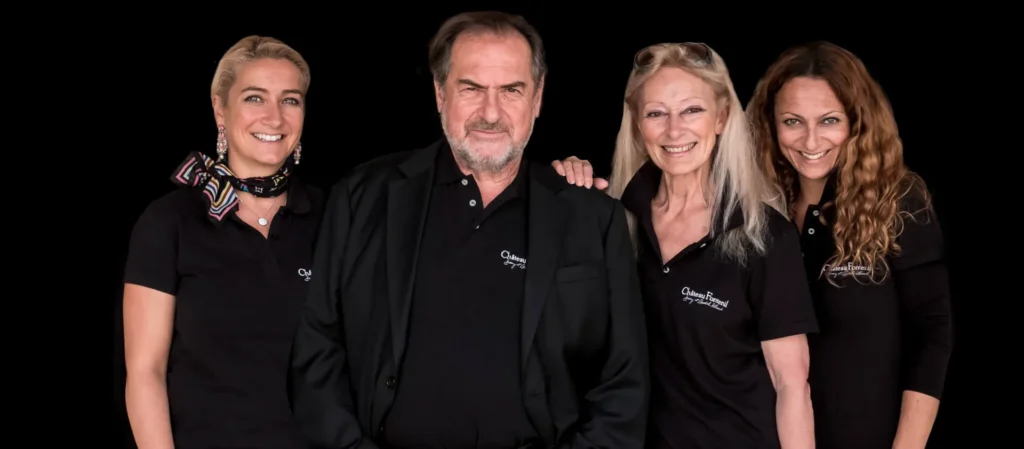
Rolland’s fondness for the richer, rounder ‘Parkerised’ style led some to claim that all his wines bore those traits, regardless of their provenance; that he was somehow diluting their terroir. It was a charge he always rejected. Though while Parker was somewhat thin-skinned about such criticism (I once had an exchange of legal letters with him after he branded Decanter ‘anti-American’ for questioning his undue influence), Rolland’s more carefree character – a trait that endeared him to many – meant he adopted a more relaxed stance. ‘If you have no critics, you may as well not exist,’ he told me last year.
That bonhomie was tested to its fullest in the wake of the 2004 documentary Mondovino, in which Rolland was cast as part of some sort of global cabal, crafting polished but indistinguishable wines which Parker would obligingly garland with 100 points. Rolland was shown repeatedly in the back of his chauffeur-driven Mercedes smoking cigarillos and laughing somewhat manically as he went from client to client, to whom he apparently dispensed identical advice. The film sought to pitch boutique producers against global conglomerates, and director Jonathan Nossiter’s editing was, to say the least, highly selective. Even the equable Rolland was moved to comment, accusing Nossiter of being ‘really dishonest’ in an interview he gave to Jancis Robinson MW on the film’s release.
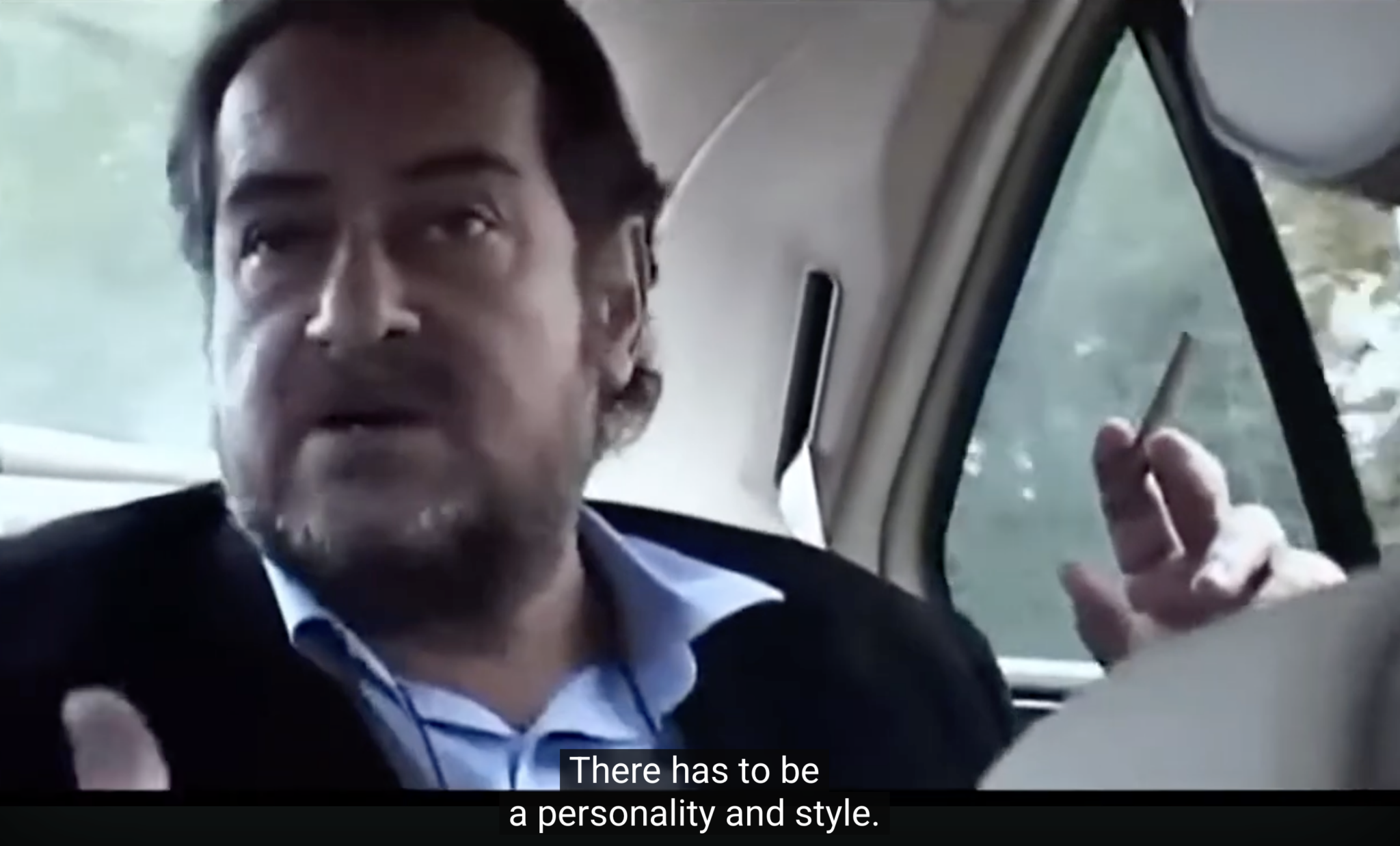
One thing no-one could question about Rolland was his work ethic (hence the chauffeur – he could hardly drive himself across Bordeaux from château to château each day, tasting numerous wines at each, while making calls in between). Twelve-hour working days, tasting countless similar young barrel samples would, for most people, be exhausting. Being able to then finalise a blend that made such samples taste seductive is a rare skill indeed. Those who shadowed him struggled to keep up, while those who tasted with him were dumbfounded by his ability.
I remember Fabrice Bacquey, cellarmaster at Château Phelan Ségur, recounting Rolland’s annual blending session with the wide-eyed awe of someone who had just watched Lionel Messi or Luciano Pavarotti perform. ‘The team would spend weeks preparing for Michel’s visit, tasting and re-tasting hundreds of samples,’ Bacquey told me. They would then cut these down to a dozen or so blends for Rolland to taste. Rolland would do so, then ask to taste the component parts. ‘Within minutes, he would compose a totally new blend that trumped any of ours,’ said Bacquey. ‘It was incredible.’
Rolland was candid about his talent. ‘I can’t explain how I do it,’ he told me in his interview for The Back Label last year. ‘It’s instinct – like a painter or a golfer who has a magic touch. I just see the blend in my head.’
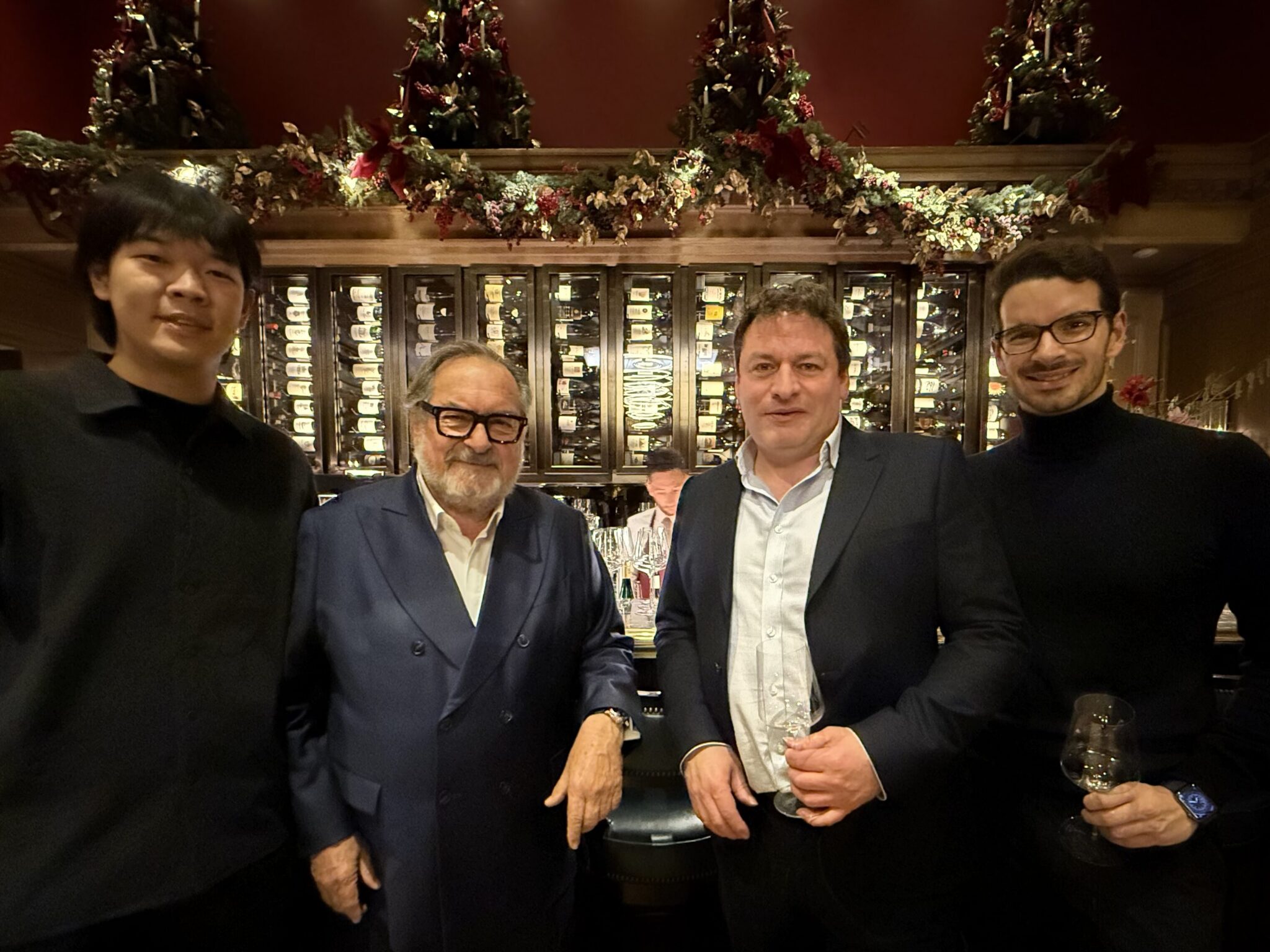
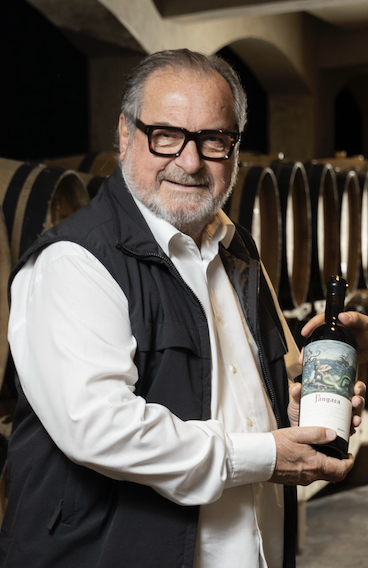
While his talent and commitment were not in doubt, the accusation that his success came at the expense of typicity never left him. His visit to the London Club last year was to host a tasting of his multi-continent Bordeaux blend Pangaea, which combines wines from five different countries and costs £600 a bottle. It’s the kind of wine that would send his critics apoplectic.
If Pangaea is an extreme case, Mondovino landed upon a more tangible example in the form of Margaux third growth Château Kirwan. With the wine underperforming, the owners had called in Rolland to turn its fortunes around, which he duly did – but, according to some, at the expense of its terroir. ‘It doesn’t taste like a Margaux, yet alone a Kirwan,’ said the then head of Christie’s wine department, the late Michael Broadbent. The venerable commentator added that he would rather drink a sub-standard wine that was typical of its appellation than an ‘innocuous, glibly made, global wine’. Discuss…
For his part, Rolland maintained that the place is always stronger than the winemaker. ‘It’s not possible to make a Saint-Estèphe in Pomerol, or a Pomerol in Saint-Estèphe,’ he told me last year. He also never tired of reminding people that he was paid by clients to make technically better wines that would find favour not just with critics but also with consumers. As Bordeaux authority Jane Anson told the New York Times in its obituary of Rolland, ‘He was aware of giving the client what they wanted – and more often than not they came to him for impact, and for generosity in the glass.’
Rolland’s first experience was with his family winery, Le Bon Pasteur in Pomerol, which he inherited in 1979 on the death of his father. At a time when Bordeaux was suffering a string of poor vintages, he soon diagnosed the problem as lying in the vineyard, notably through the harvesting of under-ripe grapes. And it wasn’t just in his own vineyard that he encountered the issue. Rolland would build up his clientele by visiting the vineyards of neighbours, while his wife Dany focused on providing the analysis in the lab. It was to prove a winning combination.
As the long-time wine writer and editor Robert Joseph observed, while Rolland was blamed for favouring ‘over-ripe’ wines – ‘which many people enjoyed’ – ‘he received little, if any credit for helping to rescue Bordeaux from the weedy, green fare that it was selling, and that almost no-one liked’.
Rolland himself was matter-of-fact about his palate. ‘I was born in Pomerol and that influenced my thinking because Pomerol uses mostly Merlot to make round, supple wines,’ he told Decanter back in 2003. ‘This is my taste. And I wanted to make wines that I liked to drink. Perhaps if I had been born on the Left Bank, I would have liked more tannic wines with more acidity. But I don’t.’
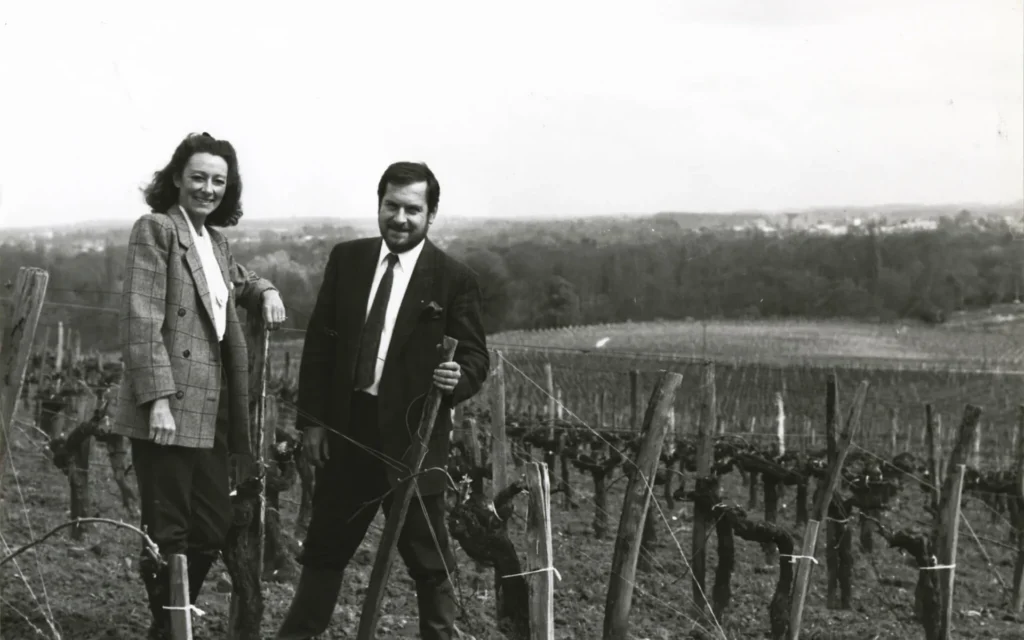
At the time, he acknowledged that maybe he’d been lucky because ‘everyone in the world is now looking for roundness, suppleness, generosity and opulence’. Two decades later, that was no longer the case. ‘Today, the fashion is for acidity and greenness, which is not for me,’ he said on his visit to the London Club last year. ‘But my taste is my taste. I’m not saying it’s the only one, or the best one, but I like what I like.’
Most importantly, perhaps, while he may have been wedded to his Pomerol palate, he was by no means narrow in his outlook. Even back in the 1990s and 2000s, when Bordeaux was riding the crest of a wave and the region as a whole had a not entirely undeserved reputation for something of a superiority complex, Rolland was resolutely outward-looking. As he said in that 2003 Decanter interview:
‘There is huge global competition now. Badly made, old-fashioned [French] wines hiding behind their appellations are finished. Our problem is that we aren’t moving fast enough. Look at Chile. Even seven years ago, no-one there was producing very good wine. Now there are lots. It’s the same in Argentina and the US. In the UK, France [has] lost 25% of the market. It’s crazy. We should have acted earlier.’ Again, he was to be proved right.
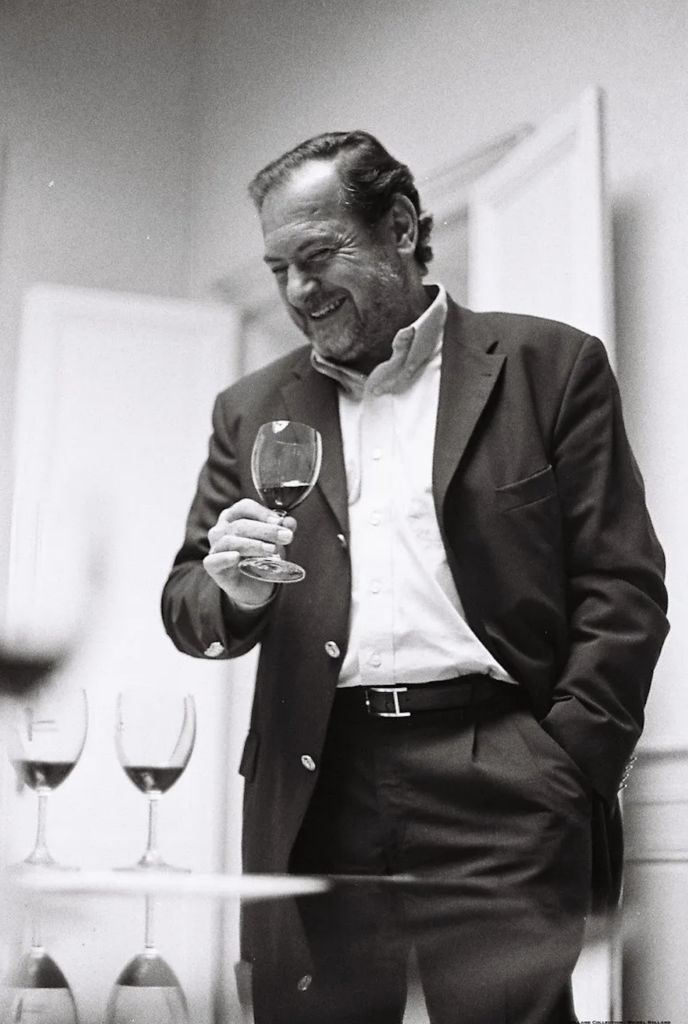
It’s hard to conclude that Rolland and his drive for professionalism was not a force for good in such emerging winemaking countries. ‘That he is a magician is without doubt,’ wrote Jancis Robinson MW back in 2005. ‘[And] outside Bordeaux, I think he has been almost entirely beneficial… accelerating winemaking progress in countries such as Argentina, Chile and India in a quite extraordinary way.’ She was less convinced about his influence within Bordeaux, however. ‘Some of the wines he makes there I like, but many of them I can spot in a blind tasting as a Rolland wine rather than as, for example, a Listrac or a St Emilion.’
Everyone will have their own opinion as to Rolland’s legacy. I like to remember him as someone with a huge appetite for work who loved his job and was very good at it. Someone who simply loved wine, and wasn’t too bothered about all the external noise. ‘With all the tastings and note takings, there are professionals who only ever taste wine and never drink it,’ he once said. ‘I sometimes think [those] people miss the point of wine.’ And what is that? ‘To enjoy it with lunch and dinner, with friends.’ His many friends will be mourning his loss.
Not a 67 Pall Mall Member? Sign up to receive a monthly edit of The Back Label by filling out your details below
WHAT
I’VE
LEARNED
Ed Carr, House of Arras
CRITIC’S
CORNER
Matthew Jukes on Australia
TWO
MINUTES
WITH
Kurtis Ogasawara, Robert Mondavi Winery