


TWO MINUTES WITH | Federico Radi, Biondi-Santi
20 March 2026
Tuscan born and raised, Federico Radi studied oenology at the universities of Florence and Siena before working for Chianti Classico properties Isole e Olena and Mazzei. In 2017 he joined the legendary Brunello di Montalcino estate Biondi-Santi, becoming director of viticulture and winemaking two years later
What is your ‘last supper’ wine?
I would love to enjoy the 1955 Biondi-Santi Brunello di Montalcino Riserva one last time – a wine that showcases the immense potential of Sangiovese. It has evolved very slowly and is hugely complex, with the classic balsamic and blood orange notes, plus hints of undergrowth and mushroom, and the balance of acidity and tannin after 70 years is amazing. It is also a pillar of Italian wine – the only one selected by Wine Spectator in its 12 best wines of the 20th century.
If I have to pick a wine from a different estate, it would be the 1976 Graacher Himmelreich Riesling Trockenbeerenauslese from JJ Prüm. 1976 is my birth year, but it was a terrible vintage across most of Europe, and it’s impossible to find good wine from Italy or France because there was so much rain in September and October. Perfect, though, for the development of noble rot in the Mosel, where it produced sweet wines of remarkable elegance and depth with exceptional ageing potential. The Graacher Himmelreich Riesling is vibrant, complex, enigmatic… I tried it once, five or six years ago, and I’d love to taste it again.
I love every aspect of Riesling. It’s such a beautiful, sophisticated variety. It’s so versatile, and can pair with lots of food – not just sweet food, but Asian fusion dishes. I also feel it has a bright future, with climate change in mind…
Where is your dream vineyard?
I’m fascinated by Armenia and Georgia. It’s here where our roots in viticulture and winemaking lie. Our most primordial DNA rests there. In these lands, ancient grape varieties of extraordinary charm and remarkable potential still exist – red grapes such as Areni Noir and Shavkapito; and white grapes like Rkatsiteli, Kisi, Voskehat and Chilar. Lebanon, too, is of great interest to me – particularly now, when they are facing such challenges due to the geopolitical situation.
Who is your wine hero?
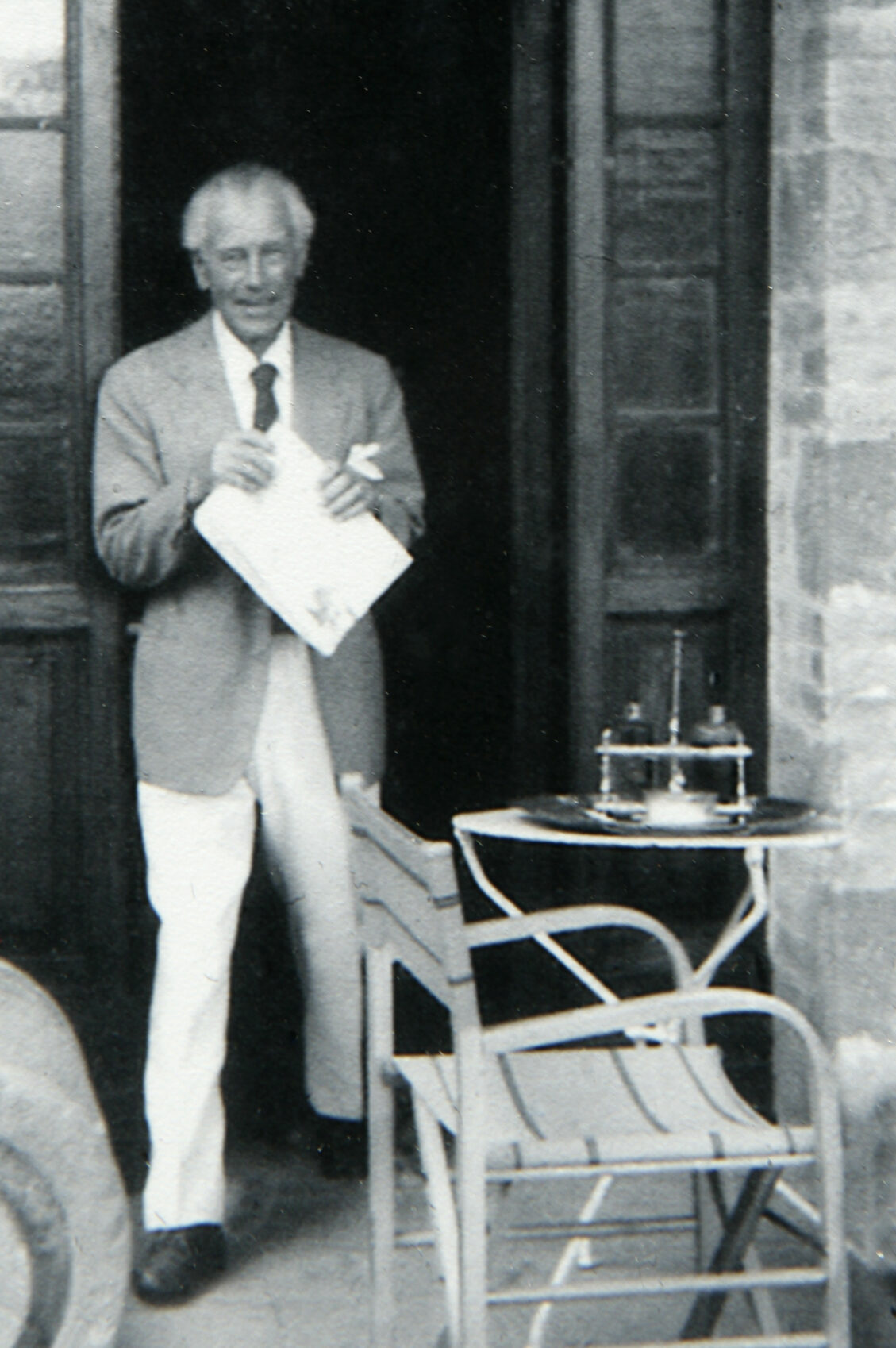
I have many, but I will pick Tancredi Biondi-Santi, who was arguably the first truly ‘modern’ Italian winegrower. Around a century ago, he started thinking in terms of quality, introducing new concepts while also adopting an approach that positioned wine at a higher level of market perception. He was a man of great charisma and culture – someone who was able to look far beyond his time.
What’s the next big thing in wine?
The future of wine seems to lie in a mix of ancient roots and modern awareness – rediscovered grapes, respect for terroir, and more sustainable ways of farming and making wine. In short, authenticity without filters. By preserving this approach, new generations will continue to be drawn to wine.
What’s your favourite wine memory?
The most important moment, without a doubt, was ten years ago, when I first met my partner. It was during a walkaround tasting, and she was presenting the wine from the company for which she worked back then. I can’t say the wine was particularly memorable, but she certainly was, and I found myself focusing more on her than the wine…
Not a 67 Pall Mall Member? Sign up to receive a monthly selection of articles from The Back Label by filling out your details below
WHAT
I’VE
LEARNED
Ken Forrester, South Africa
MEET
THE
SOMM
Max Melvin
UNDER
THE
SURFACE
Why the fuss over old vines?