


WHAT I’VE LEARNED | Tim Mondavi, Continuum, Napa Valley
20 November 2026
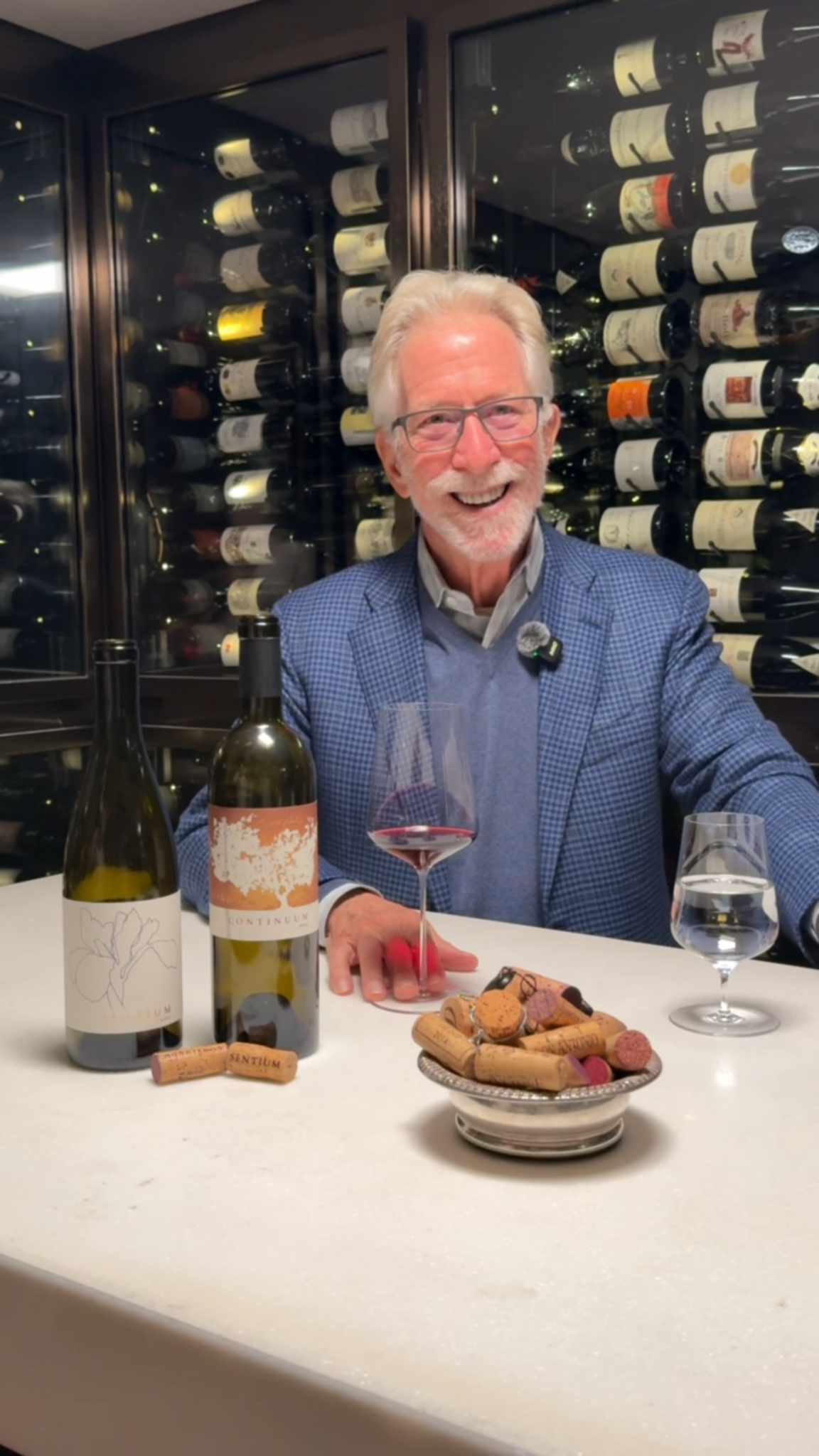
Today the elder statesman of the Mondavi family, Tim Mondavi emerged from the 2004 break-up and sale of his father’s Robert Mondavi Winery to launch the next stage of his family’s winemaking story at his Continuum Estate, established in Napa Valley‘s then unheralded Pritchard Hill
‘We didn’t want to lose Robert Mondavi Winery, with Opus One and Luce and Seña and Ornellaia and Masseto, but we did. It’s always best to find the positive side of the story and carry on.’
‘When we were trying to identify our next step, I had to understand how to convey the fact that our family has been in wine in California since 1919, which is fairly rare. Continuum was a great name because we wanted to carry on with the best of what our family stood for. Not all of it – just the best.’
‘It’s true that not as many people know about Continuum as I would like, but we’re very small, and in the timeline of great wine, we’re still very young. We’ve purposefully been relatively discreet.’
‘My father took us to the stars, always pushing us to take risks, experiment and focus on the best. When it was my turn to take up the lead for my family, it was natural for me to carry on.’
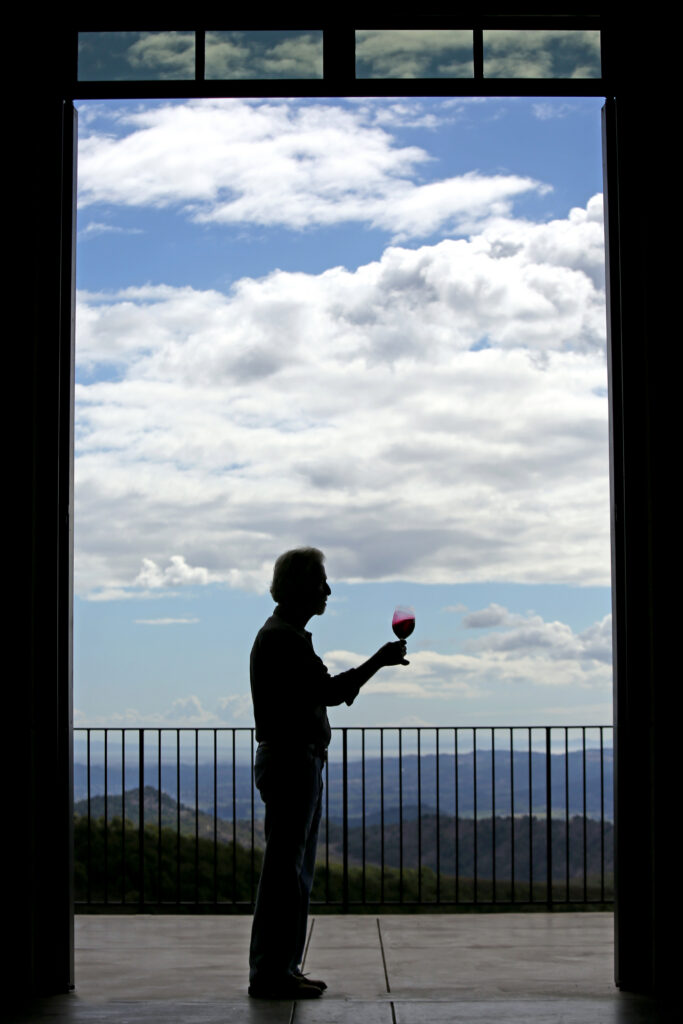
‘My grandfather had left California’s Central Valley and had pointed my father to Napa Valley. And my father took the best site from the valley floor, To Kalon, which became home to Robert Mondavi Winery. I continued that trajectory by following my Burgundian philosophy. Burgundy speaks about site better than anyone, and the best sites, the premiers crus and grands crus, are always on the hillsides. I saw enough in 30 years of winemaking at Robert Mondavi Winery to corroborate that, so I went to Pritchard Hill.’
‘I didn’t know exactly where I wanted to be, but I knew I had to find a site that was worthy of our family heritage. You can’t make great wine without a great site. It took me a long, long time to find it, but I felt this huge legacy on my shoulder that I had to carry on with, so I was very motivated. And I was lucky.’
‘Back then, I’d heard about temperature inversion, but I didn’t feel it, so I wasn’t driven by the threat of climate change. I was looking for soil difference, the right aspect, better drainage. We’re 1,300-1,600ft above sea level and our climate is different to the valley floor – we’re cooler in the afternoons, often by 10-12˚F, so it’s more adaptable to Merlot and Cabernet Franc.’
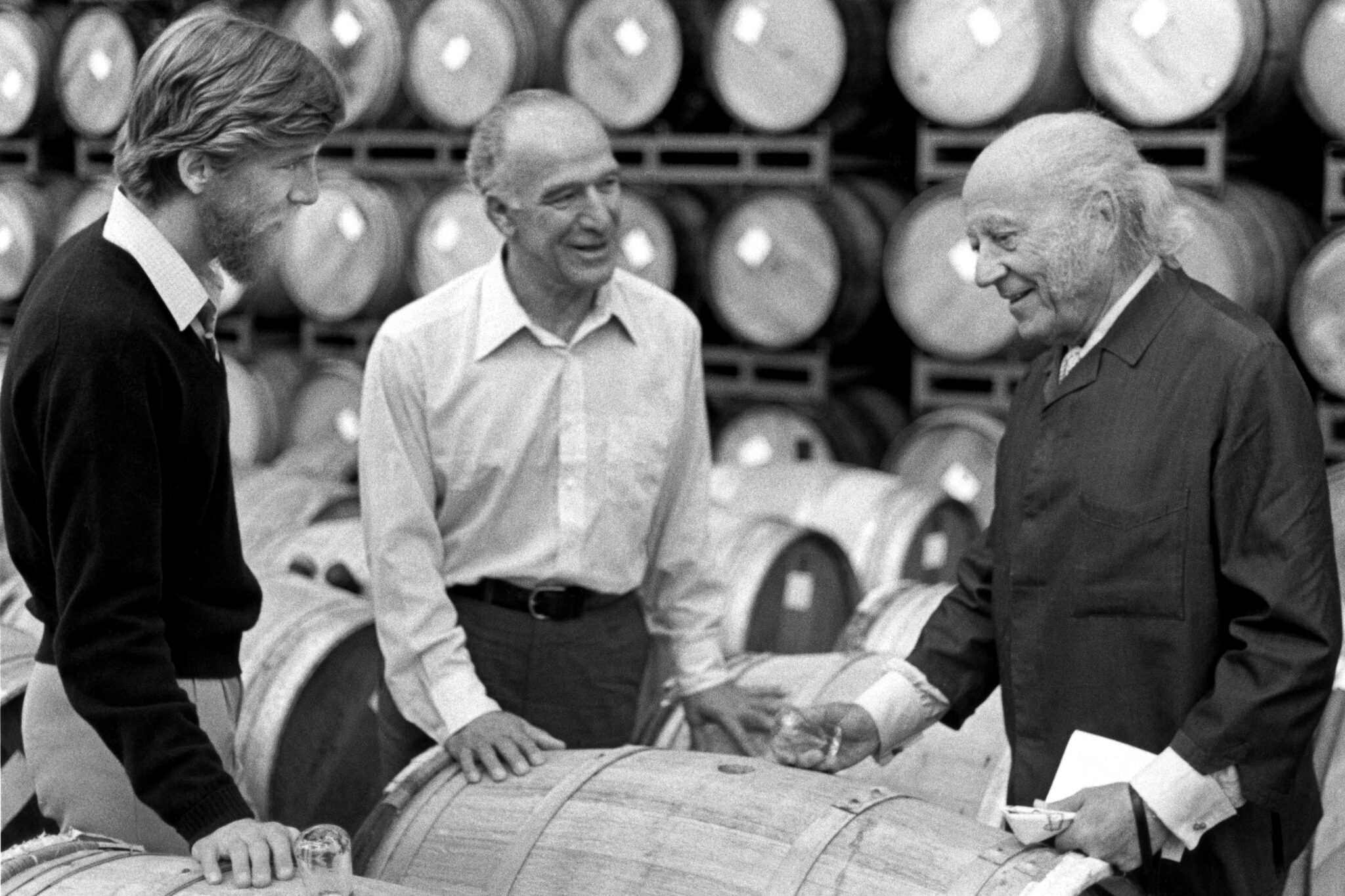
‘Winemaking is a very personal endeavour, and I wanted to make a wine that would differentiate me, stylistically, from the wine that I was identified with at Robert Mondavi and Opus One, which was driven by Cabernet Sauvignon. I wanted to make something that was more tender of tannin, expressive of fragrance, with more of the velvet glove rather than the iron fist. Cabernet Franc is just that – it envelops the firmness of tannin. I’m not a big fan of wines that bite back.’
‘Cabernet Franc is in the ascendancy around the wine world, for two reasons. It’s more tolerant to late-season heat, so more adapted to global warming. And societal trends mean people aren’t buying cases of wine for their grandchildren any more – they want something that is more approachable earlier. I think the best of Bordeaux and the best of Napa Valley are becoming better at minimising the harshness of tannins – that’s a global phenomenon.’
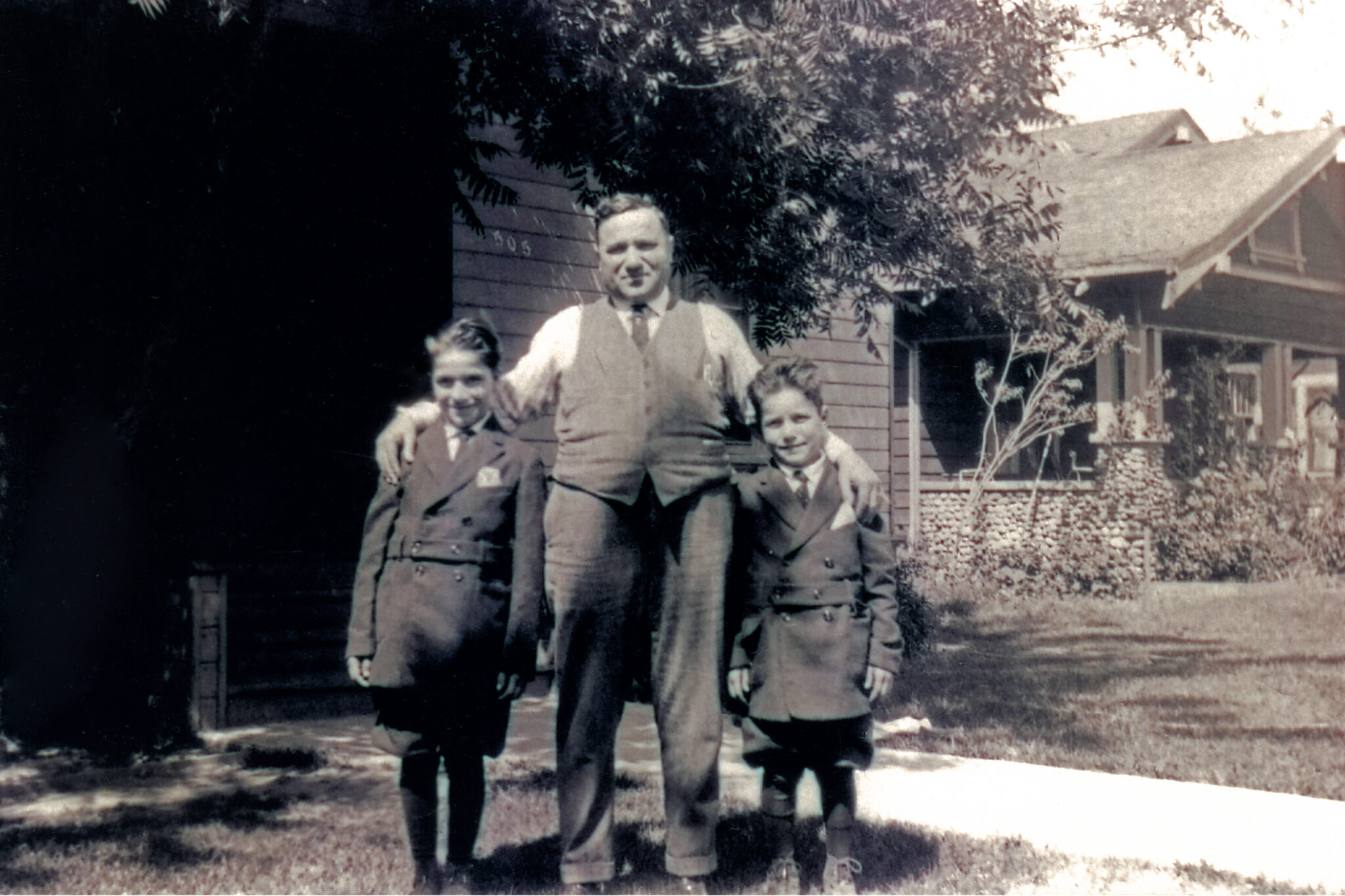
‘People always talk about my father, but my grandfather was really the prime mover. He was a very, very smart man, very entrepreneurial, but a very quiet man. The other side of the coin was my grandmother Rosa, who was very social – a trait my father inherited – and a great cook. Ultimately, that’s the basis of our family – wine, to us, is the celebration of a meal, to bring people together in health and happiness. That’s central to who we are.’
‘I always felt that my father cast a huge shadow. It was hard for me to get out from under it, and people kept telling me I had big shoes to fill. But as Isaac Newton once said, “One can have great vision by standing on the shoulders of giants.” I like that a whole lot better.’
‘I’ve been on Robert Parker’s heroes list and he’s also used my wine to mop the bathroom floor – notably the ‘98 and ‘99 vintages. In those days, some of the critics were looking for bigger, richer, broader. But those vintages were cooler, later, leaner. The trouble was, we’d had a run of great vintages, and ’97 was the best ever. At the same time we had a lot of newcomers to the industry who had sold their financial business and thought wine was easy and great every year. Then ’98 comes along, with early budbreak and frost, and people were saying, “In all my three years here, I’ve never seen frost like this…”’
‘Today, those type of wines, like 2010 and 2011 – cool, wet, late years, which were not held onto by the critics – have come around and are pretty damn good wines. And now that style is coming back. I’ve seen both sides of that and have vowed not to chase the critics – be aware of them, but follow your own instincts. Fads come and go. Today, most of the critics are younger than me, and I’m doing what makes sense to me.’
‘A lot of people didn’t realise that in wine, it takes a long time, focus and determination to do something very well. There was a time when everything was rosy – the economy, stocks, and everybody saw wine as something to enjoy as part of a healthy diet – and lots of people got into the industry from other fields, believing it was easy. In some cases, prices went too far.’
‘Planting a vineyard is one thing; making wine is another; but building a brand is the hardest thing of all, and takes a tremendous amount of commitment. A lot of people came in late, and, as they say, “Last in, first out”. That’s what we’re seeing now. Wine is not a get-rich-quick programme, and a lot of people mistakenly thought it was. But the people who’ve been around for a while will still be around.’
‘My father was very risk-prone and loved a challenge. Sometime in the late 80s, he went to Chile, and came back saying we had to do something there. I was the one who had to implement his plans, and I was already telling him not to go too fast too soon. I’d already managed to squash his plans to import Russian Cognac after he visited Russian when Glasnost was in the air. So my immediate reaction to Chile was “No chance”. But when I went there, I was blown away, and was like “Count me in.”’
‘We nearly did something with Angelo Gaja. My father went to visit him, and they travelled around Barbaresco and other parts of Piedmont. My father told him that the wines were wonderful but everyone there was asleep and not making enough noise about them. Angelo changed that, and later we talked about doing a venture together. We looked at a vineyard in Serralunga, and I walked the vineyard with him – but as Angelo was doing his research, he realised how big Mondavi had become, and he said, “I’m not sure we can do this. It would be like a mosquito making love with an elephant…”’
‘My father wrote a mission statement at the end of the ‘80s when tobacco was being aggressively targeted and we were worried that wine might be next. He talked about how wine has been with us since the beginning of civilisation and is an integral part of our culture and heritage. He wanted to counter the neo-prohibitionist movement. Now that same drumbeat has come back.’
‘Ultimately, the meaning of life is to socialise – and wine’s whole purpose is to bring people together to do just that.’
Not a 67 Pall Mall Member? Sign up to receive a monthly selection of articles from The Back Label by filling out your details below
TWO
MINUTES
WITH
Kurtis Ogasawara, Robert Mondavi Winery
UNDER
THE
SURFACE
English winemakers feel the heat
MEET
THE
SOMM
Eric Li