


UNDER THE SURFACE | Jancis Robinson MW on the future of the wine world
20 November 2026
The veteran wine writer marked the publication of the latest edition of the World Atlas of Wine with an event at the London Club pinpointing the trends and regions for wine lovers to know
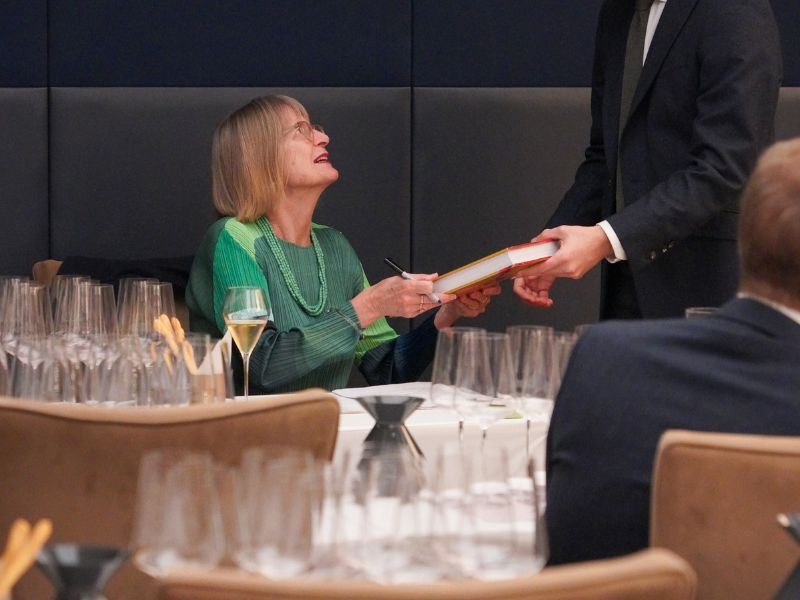
In addition to her 75th birthday, last year saw Jancis Robinson celebrate her 50th year as a wine writer, and the 25th anniversary of her eponymous website (milestones she marked by sitting down with us for an interview for The Back Label). Anyone who reads her monthly diary online will know, however, that such landmarks have not precipitated a dilution in her workload. Each month is peppered with tastings, trips, lunches, dinners and a string of other engagements, both social and professional – and many somewhere in between – that would fatigue somebody half her age.
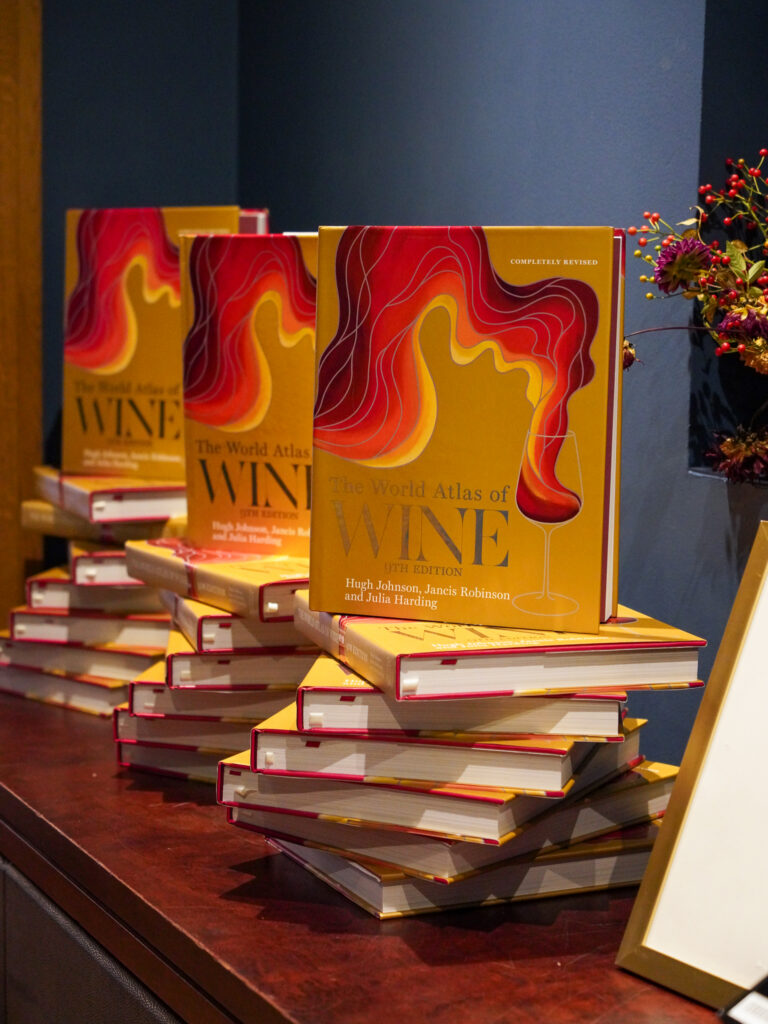
This year, amidst a typically frenetic schedule, she has launched the latest edition of surely the wine world’s most comprehensive reference work, the World Atlas of Wine, which she has co-edited since its 5th edition. Since the first edition was produced by Hugh Johnson in 1971 (pre-dating even Jancis’ body of work), over 5 million copies have been sold across nine editions in 15 different languages. Something of a barometer of the wine world, the latest update – with assistance from fellow MW Julia Harding, and Johnson’s original texts constantly updated – comes after three years of gestation, and features a host of new regions, along with another 15 maps.
Wine consumption in the future is going to be different. It’s going to be more thoughtful
Jancis Robinson MW
There was no escaping the fact that many of these trends have been driven by the changing climate. Comparing the ‘fact files’ between the previous edition, published just seven years ago, and the new edition was ‘scary’, said Jancis. ‘The wine world is expanding towards the poles,’ she added. And while in the Southern Hemisphere it can’t get much further than Patagonia (as seen in Otronia’s 2021 Block III & VI Chardonnay from Chubut, and the most southerly commercial vineyard in the world), ‘The two new pages on Northern Europe are quite devastating in terms of how the climate is changing.’
Chardonnay – the world’s most planted white grape variety – provided an alarming case study. The Atlas’s revised introduction features two maps outlining where the variety could feasibly be grown in Europe in the year 2000, alongside a map projecting its spread in the year 2100. While in 2000, Burgundy was among the more northerly outposts, by 2100, it sat firmly at the southern end of the spectrum, with potential plantings right across northern Europe and even Scandinavia.
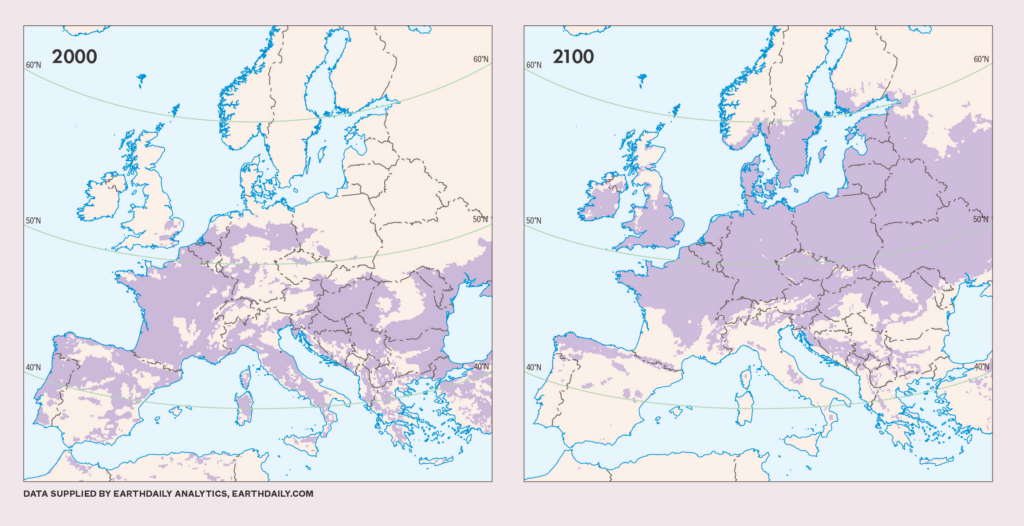
The positive side of this somewhat startling scenario is the wealth of new, exciting regions – many that would have been inconceivable not just when the first edition of the Atlas was produced, but for most of the subsequent updates. ‘The vine is marching ever further north,’ said Jancis. ‘There are now vineyards throughout Scandinavia and even the Baltics,’ adding an honourable mention for the ‘very dynamic’ Poland, which she suspects will get its own page in the next edition.
For our event, she chose to focus on Belgium to illustrate the trend, via Domaine La Falize’s 2021 Namur Chardonnay, an unfined and unfiltered biodynamic wine made with minimal intervention. Wine is made right across Belgium, with around 150 producers working 1,000ha of vines and yielding an annual production of 4.5m bottles, notably Chardonnay and sparkling wine. From that perspective, it is a microcosm of the subject of Jancis’ next foray, England (which boasts 5,000ha and 250 wineries, producing around 15,000 bottles).
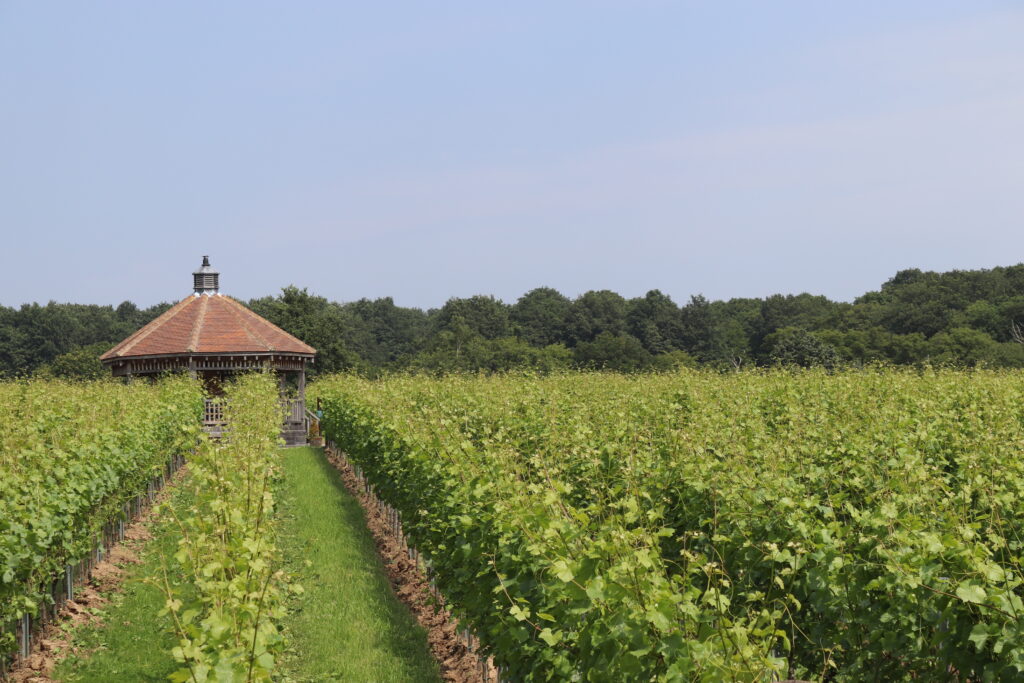
The focus here was on the country’s increasingly acclaimed still wines, which are beginning to emerge from the shadow cast by the success of sparkling wines over the last 25 years. ‘The proportion of still wine is going up and up as our summers get warmer,’ said Jancis. And so, it seems, is the quality. Top of her tree is Danbury Ridge, which she labelled the Nyetimber of still wines, in recognition of the latter’s role as the archetype of English fizz. Danbury’s 2023 Octagon Block Chardonnay harnesses grapes grown in Essex’s Crouch Valley – the ‘bee’s knees as far as English still wine goes’ – and source of a huge vote of confidence delivered by the recent investment from Jackson Family Wines’ for its Marbury Chardonnay and Pinot Noir. Although to the audible shock of the audience, Jancis expressed concern that even Essex might eventually prove too hot for such fare…
Next came an Assyrtiko – not from Greece, though, but Australia. The 2023 Jim Barry bottling, from the Clare Valley, was there, in theory, to showcase how producers are turning to alternative varieties to mitigate climate change. In practice, Jancis admitted she also chose it because ‘I just love Assyrtiko’. Why? ‘It’s just so obviously a top-quality grape variety – it’s got good acidity, structure, that thing that we all try not to call minerality – and it ages very well.’
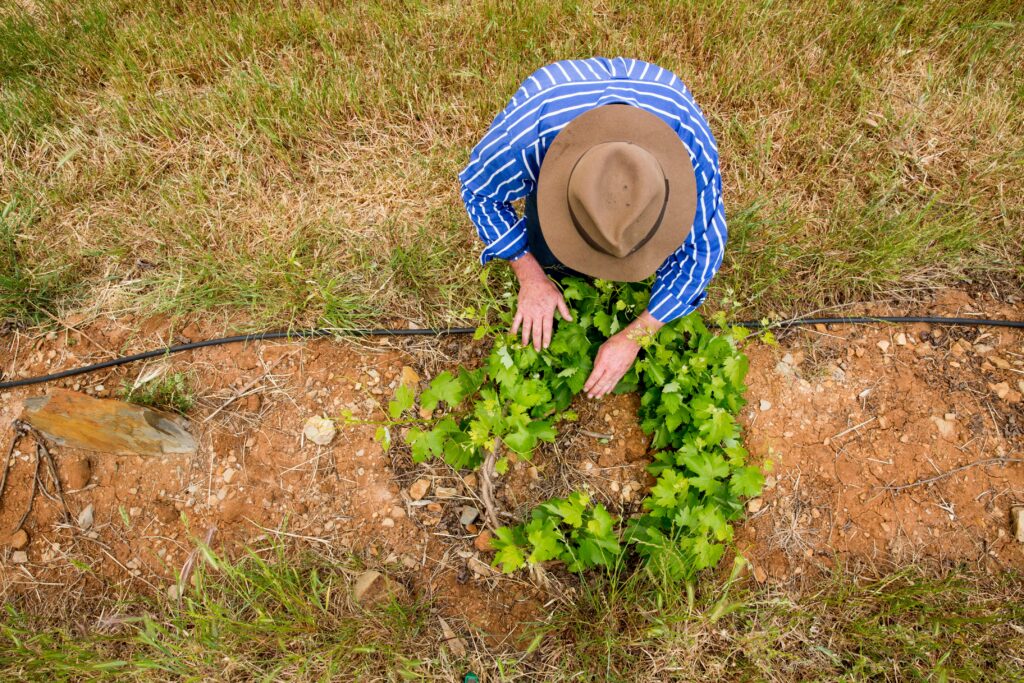
It would have been too obvious, she said, to showcase a Greek rendering, and indeed such has the country’s progress been over the last two decades that, along with Portugal, it has become ‘old hat’ to recommend Greece as an up-and-coming region – even though ‘its indigenous grape varieties have such strong character that it’s really worth getting to know them’. Instead, she chose to focus on Assyrtiko’s adaptability to hot temperatures, also referencing South Africa’s Eben Sadie, who has planted the variety in Swartland. Meanwhile, beyond Assyrtiko, Jancis gave a shout out to another white variety she felt we’d be seeing much more of – Godello. ‘It’s not dissimilar [to Assyrtiko] in structure, even if it’s got a slightly different flavour. It’s a sort of Puligny-like structure, but with nerve.’
If Australia is misunderstood, the same could be said for New Zealand, and more specifically, Marlborough, the subject of a new soil map in the atlas. The prime movers behind the map were winemakers Matt Thomson and Sophie Parker-Thomson MW, who were motivated by concern that the region’s reputation was purely for commercial Sauvignon Blanc. They wanted to show that Marlborough is far from a one-trick pony – and Jancis happily concurs. ‘The Pinot Noir from there is far more exciting [than Sauvignon Blanc],’ she said, with the couple’s 2023 Uptown Downs bottling from their Blank Canvas label serving as exhibit A. Martinborough, Central Otago and Canterbury were also name-checked as arguably even more renowned for Pinot, while Jancis also outed herself as ‘a huge fan of’ New Zealand Chardonnay. Anything but Sauvignon, it seems…
Portugal was hailed by Jancis as home to a warm-climate Pinot Noir – Castelão – as seen in Hugo Mendes 2024 bottling from Lisboa. The hinterland of Lisbon isn’t necessarily producing Portugal’s absolutely finest wines, said Jancis, but she’s a fan of Portuguese reds as a whole, given most ‘seem to have that smoothness, acidity and structure’. Castelão is the country’s most planted grape variety, and in the hands of this small but ‘very talented’ producer – a bio-tech engineering graduate who only started making wine in 2016 – it can yield ‘very decent’ wines.
Other emerging regions were also highlighted via wines from new, young producers. Portugal’s Azores is home to an ‘eruption of winemaking talent’, as evidenced by the Azores Wine Company’s 2023 Arinto dos Açores Branco. Aragon in Spain is similarly exciting, as seen in the two-hectare vineyard of old-vine Garnacha from which Fernando Mora MW mitigates rising temperatures to make the 2023 Garnacha Supersónico, Bodegas Frontonio, Viño de la Tierra de Valdejalón. Then there was the 2024 Les Pierres Noires, Jean Maupertuis, Auvergne, a Vin de France showcasing the Volcanic Loire – and volcanic soils in general – which has sparked a renaissance of a previously productive region.
Several of the wines tasted would qualify for the definition ‘minimal intervention’. So is Jancis a fan of so-called ‘natural’ wines? ‘Not uniformly,’ was the diplomatic response. ‘The thing I regret about the natural wine movement is the polarisation. I know many traditional wine professionals who tasted one or two of the first natural wines, which were flawed, and have henceforth said that all natural wine is rubbish and they’re not even going to try them. Then at the other end of the scale you’ve got the naturalista, who’s probably working in a wine bar in north-east Paris, and won’t let you even try one until you’ve listened to a lecture about how evil conventional wine is.’ Such extreme positions, she argues, are untenable. ‘The quality of wine sold as “natural” is getting better all the time. Château Latour would probably qualify as a natural wine on the basis of how it’s grown and made. That’s the last thing they would do, of course, but many conventional producers are using fewer and fewer inputs, whether in the vineyard or the cellar, so styles are slowly getting closer and closer together. My hope is that they eventually coalesce, without anyone really noticing.’
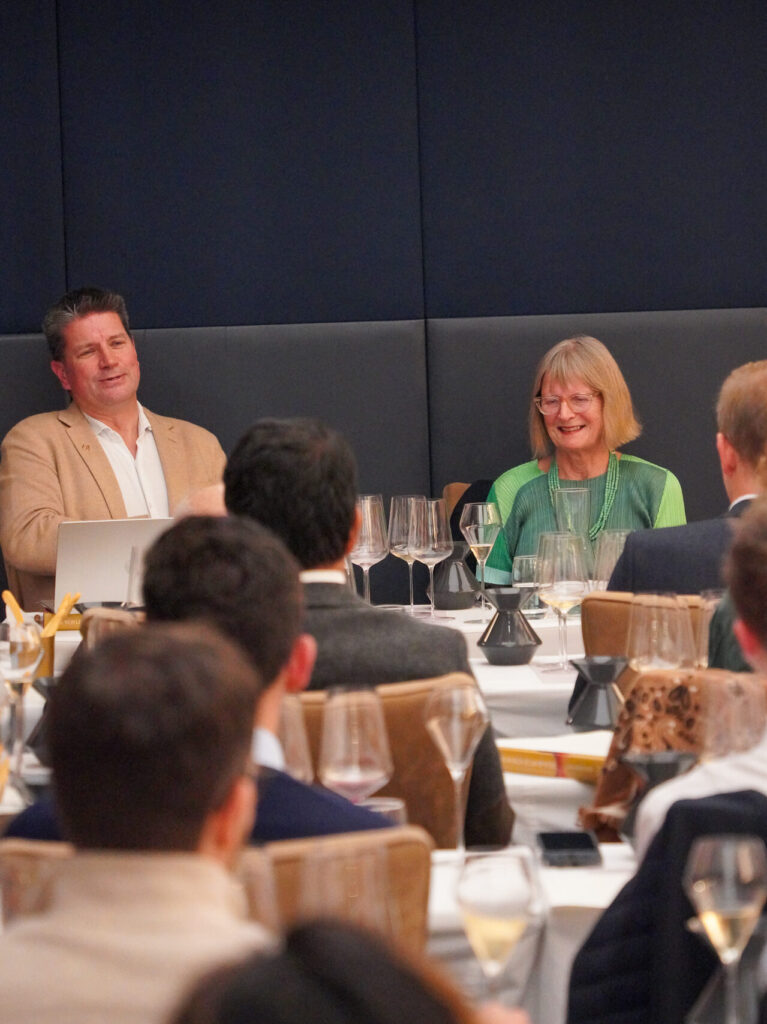
The final wine of the night was the 2020 Meljenko’s Old Vine Zinfandel from Grgich Hills, selected to highlight the value of both Calistoga, as a cooler part of Napa Valley, and old vines in general. ‘Old vines are culturally and historically important,’ said Jancis. ‘But they are also hugely important when it comes to combatting climate change. They are so much more resilient, and can cruise through a hot, dry summer because the roots are that much deeper and better able to find water, whereas young vines just topple over.’ They are also doing ‘something that we don’t yet understand’ when it comes to flavour, she added. ‘I’ve tasted wine from old vines [alongside wine from] a very similar vine planed next to it, and it has more intensity and interest.’
With so much focus on emerging regions, what about the classics? Jancis expressed concern about the dramatic variation in climate, particularly in places like Burgundy, where she told how one ‘very well-known producer’ went so far as to tell her they didn’t think they’d be producing wine in 20 years’ time because there’s simply not enough rainfall. ‘Even if they were allowed to irrigate, it’s not clear where the water would come from,’ she added. The result is that, ‘in hotter vintages, Burgundy doesn’t taste like Burgundy.’ Though, ‘as a lifelong champion of the underdog, I’m pleased to see new, small producers in Hautes Côtes de Nuits, Saint-Romain and Côtes de Nuits-Villages making some very good wines now.’ She also expressed sympathy for petit châteaux owners in Bordeaux, whose production costs are ‘not dissimilar’ to those of a classed growth, but with a selling price that is a tiny fraction of that. ‘As a result, vineyards are being pulled out all the time.’
There’s no doubt then, that it is a challenging time for the wine world. ‘Many people in the wine trade are beating themselves up saying, “Oh, wine consumption is going down.” But there is no shortage of people wanting to produce it. There’s no shortage of people wanting to study it. There’s no shortage of people wanting to take wine holidays, or buy wine books, or take out subscriptions to wine websites or wine clubs. These are all good signs…’
Jancis finished by reflecting on her first ever job, as an 18-year-old, working as a chambermaid at Tuscany’s Il Pellicano hotel in 1968, on £4 a week. At mealtimes, the staff were able to drink as much wine as they wished, for free, but if they wanted water that was safe to drink, they had to pay for it. The point, she said, was that there was a time when the bulk of wine consumption was the thoughtless glugging of cheap wine, probably sold in litre bottles from the local co-op, by people (‘mainly men’) who were not remotely interested in what it was. ‘It was just what they drank with every meal.’
This sort of consumer is dying out, she says. ‘Wine consumption in the future is going to be different. It’s going to be more thoughtful. People are going to pay more attention to the wine. The total volume consumed will probably go down, but I think the top end will do well. Because the market is so competitive, you can only survive if you are making better wine every year – and as wine lovers, we are benefitting from that.’
Not a 67 Pall Mall Member? Sign up to receive a monthly edit of The Back Label by filling out your details below

WHAT
I’VE
LEARNED
Tim Mondavi, Continuum, Napa Valley
ON
THE
ROAD
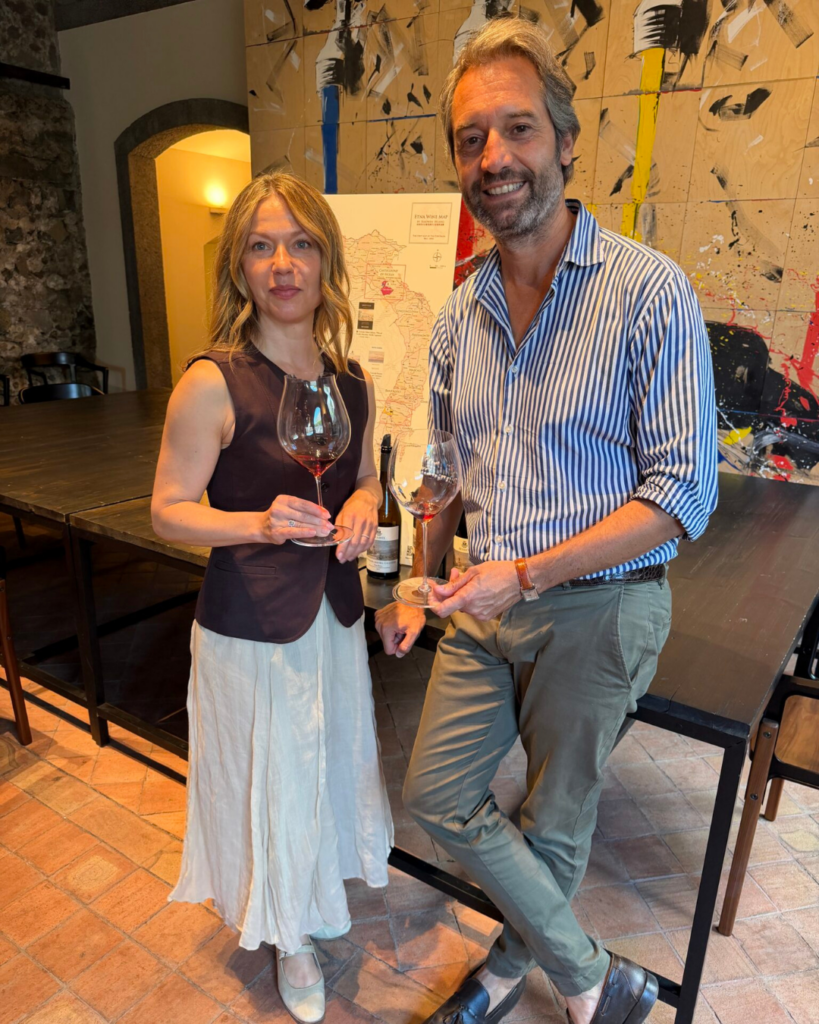
Renata Brandt in Sicily
TWO
MINUTES
WITH
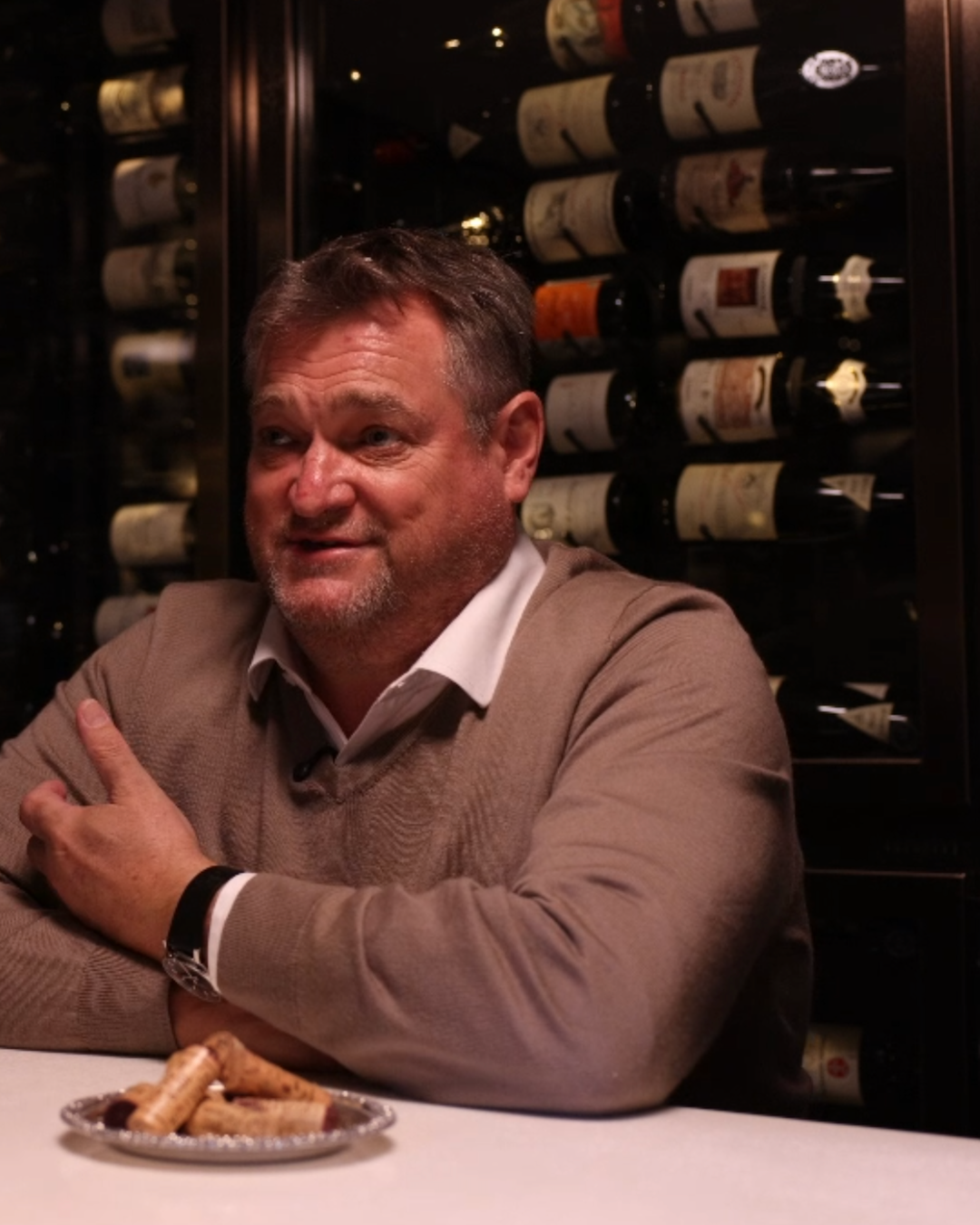
Bruwer Raats, South Africa