


UNDER THE SURFACE | English winemakers feel the heat
16 October 2026
After a summer of record-breaking heat, Guy Woodward takes the temperature of the English wine scene and asks whether such conditions are a sign of things to come – and whether that’s a positive
When WineGB – the trade association that represents the English wine industry – set the date for this year’s trade tasting, the first Monday in September seemed to make a lot of sense. There would be a nice ‘back-to-school’ feel, with winemakers, producers and trade customers re-gathering to take stock of the market ahead of the year’s harvest and the busy end-of-year retail scene.
What they didn’t bank on was the fact that, after a blisteringly hot and dry summer, many winemakers would already be pre-occupied in the vineyards and wineries, fretting about when to pick. Some were even mid-harvest, while even those who hadn’t yet dusted off the secateurs were frantically monitoring sugar levels in the grapes.
More unforeseen still, WineGB was itself somewhat distracted, hurriedly having to check the protocol around a hitherto unforeseen task. For the first time in its history, the body petitioned, on behalf of the industry, for producers to be allowed to acidify their wines. Yep, that’s right – the racy acidity of English wines, something which has served as a hallmark of their evolution over the last 25 years, and has long been taken as a given, might, in the sweltering conditions of 2026, need boosting.
The issue is complicated by the fact that the approach varies according to whether a producer is making still or sparkling wine.
For still wines, ripeness is a boon. For sparkling wines, it is something of a double-edged sword…
Around the same time, the venerable British merchant Corney & Barrow sent a pertinent email to its customers. ‘For those who enjoy English wines,’ it read, ‘the question is simple: does an early harvest mean a better one, and what might it mean for the finished wines?’ The merchant provided its own, pithy response, positing that warmer conditions would mean ‘fuller, riper styles with less of the pronounced acidity often associated with English wine. And that is where great wine begins.’ Would that it were that simple…
Instead, as winemaker Emma Rice points out, while on the surface 2026 offered the hot, dry conditions of which English producers dream, it was ‘a surprisingly complex year’. Rice is the former winemaker of Hampshire-based Hattingley Valley and now one of the country’s foremost consultants, with a string of clients around the south-east of England. As a result, she is able to offer a broad perspective on the vagaries of the season.
‘Historically in England, you leave the grapes to hang as long as possible, and then pick because you’re forced to,’ she says. ‘Even in the Crouch Valley [in Essex, home to the UK’s driest vineyards], you wait as long as you can, and then either the leaves fall off or it gets wet and botrytis takes over, so you have to harvest. This year, producers had to really pay attention and make a conscious decision as to when to pick.’
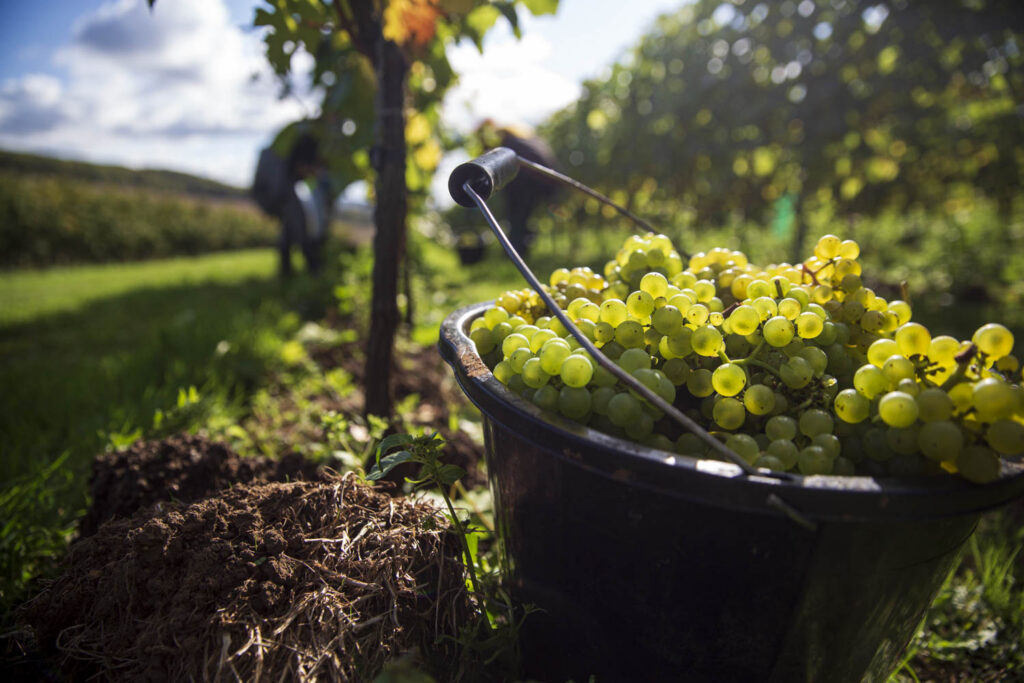
The issue is complicated by the fact that the approach varies depending on whether a producer is making still or sparkling wines. For still wines, hang time is a boon, delivering ripeness and flavour via increased sugars which temper the signature acidity. For sparkling wines, however, ripeness is something of a double-edged sword.
‘If you leave it too late, the alcohols get too high,’ explains Rice. ‘When the potential alcohol of the base wine goes above 12%, the secondary fermentation [which occurs in bottle, and provides the all-important fizz] can be difficult to achieve.’ Some producers, she said, left it too late, meaning they wouldn’t be able to make sparkling wine – or would have to blend the base wines from over-ripe grapes with lower-alcohol reserve wines from previous years.
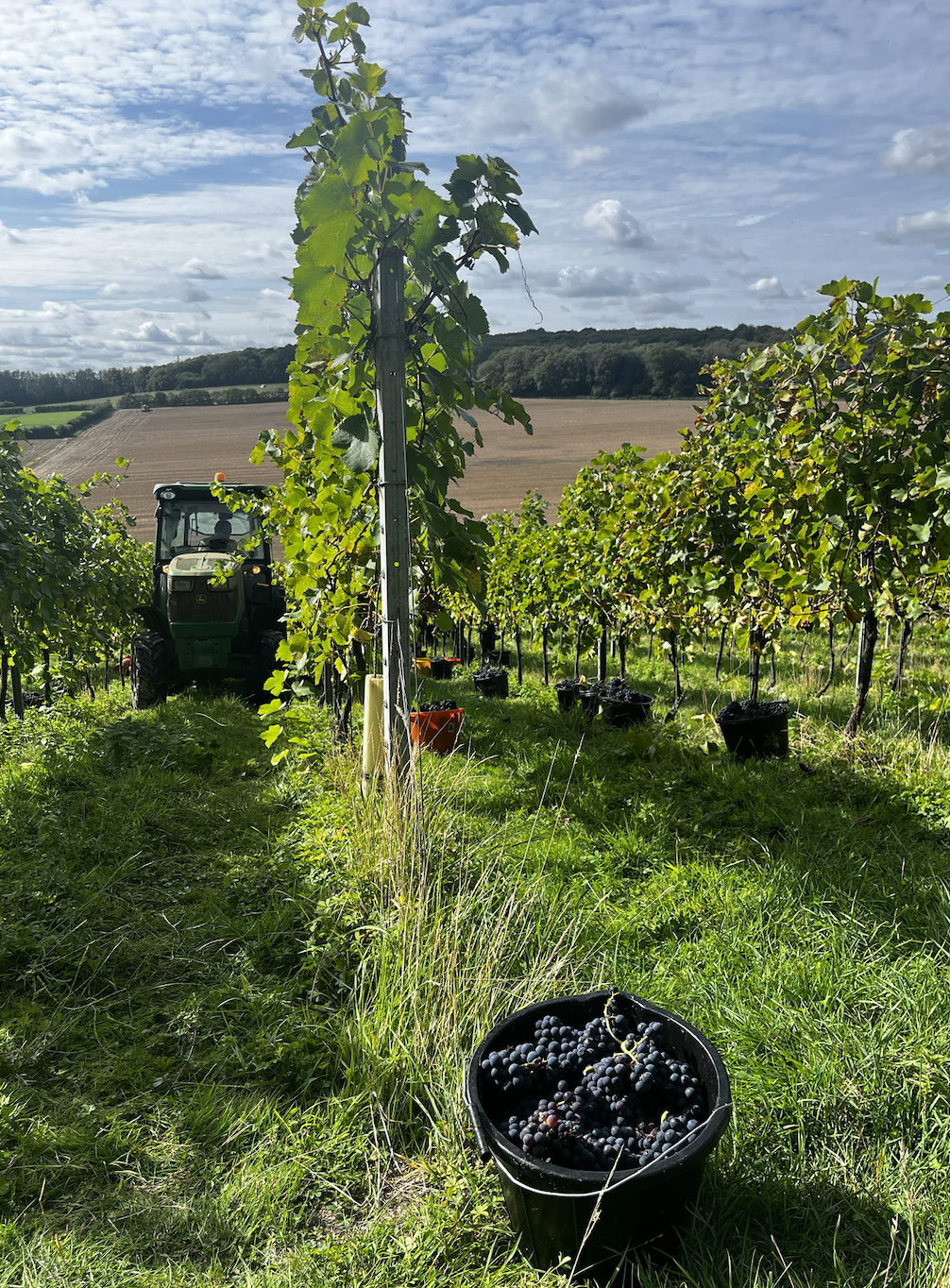
The idea of having to worry about grapes getting too ripe, or having to acidify wines was, she said, unheard of. ‘And this was at the beginning of September, which is super early.’ And despite Wine GB’s (successful) request for permission to acidify, with the price of tartaric acid extremely high, most wineries simply harvested much earlier than usual.
At Gusbourne, picking began on 26 August and finished on 18 September, two weeks earlier than 2025. The vintage was described as an ‘exceptional, big personality’ year, defined by ripe, concentrated fruit.
Fellow Kent producer Domaine Evremond was happy to swim against the tide, beginning harvest in mid-September and picking the last of the Pinot on September 25. Evremond is the nascent project of Champagne Taittinger, and one gets the sense that the team was able to tap into its experience of rising temperatures in Champagne to inform its decisions.
For Taittinger vineyard director Christelle Rinville, who oversaw the Evremond harvest having already picked the last of the grapes in Champagne, the key is flexibility. ‘It’s impossible to have a hard and fast approach,’ she says. ‘It depends on the profile of your vines, your style, whether you want to manage the aromatics with sugar or acidity.’
For Rinville, 2026 is the first example of climate change significantly impacting the English harvest. ‘20 or 30 years ago, there would be 100 days between flowering and harvest,’ she says. ‘Over the 10 last years, that has shrunk to around 85 days; today, it’s closer to 75.’
2026 is just one year, of course, and it’s easy to over-react. Reading headlines such as How hot is too hot for English wine? in UK trade magazine Drinks Business, it’s worth putting the season into wider context. Across Europe, the ‘26 vintage has been the cause of widespread alarm, with harvest weeks ahead of schedule in France, Spain and Italy. The consequent drop in yields saw The French Ministry of Agriculture forecast the lowest production levels in 70 years, while authorities in Bordeaux, which has traditionally adopted a staunch anti-irrigation stance, were forced to approve emergency watering.
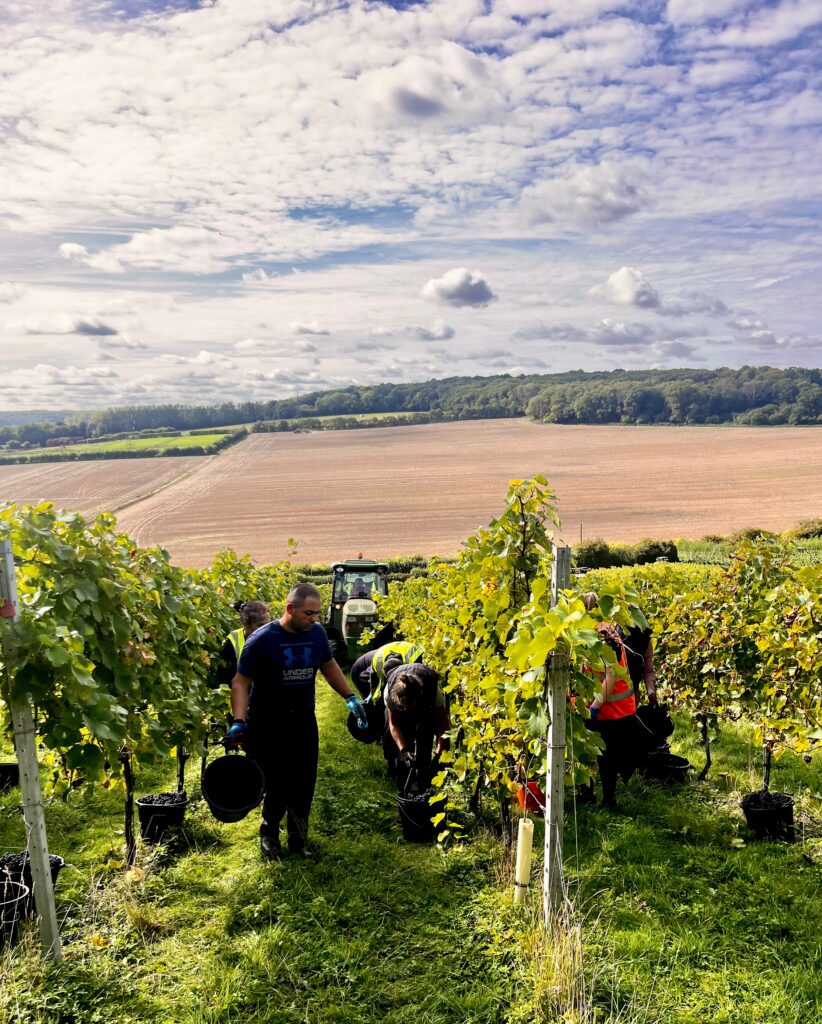
Back at Gusbourne, head winemaker Mary Bridges was positive about the vintage, which she describes as powerful, intense and full of potential. She is particularly excited about the ‘clean, evenly ripened and concentrated’ Pinot Noir, which, she says, is the best the team can recall. As a result, she faces the previously inconceivable prospect of not being able to make enough still Pinot to meet demand without taking fruit away from the sparkling wines.
Ruth Simpson of Simpsons Estate, two-thirds of whose production is in still wines, is similarly positive. ‘At surface level [2026] is good news, as it means lower disease pressure and better natural sugar development, so riper, more concentrated fruit. As a big still wine producer, this is particularly good news, avoiding the need for any green harvest or yield control or weed control.’
Rice has noticed a shift in the last couple of years as producers focus more seriously on still wines. ‘The balance is definitely starting to shift,’ she says. ‘We’re just getting the fruit ripe.’ For clients making still wines, Rice buys Pinot and Chardonnay from the Crouch Valley. Generally, she says, she’s been doing so towards the end of October, or even into November. This year, she was assessing fruit at the end of September. And while it is still tricky to make top-quality reds from Pinot, she says, the variety is capable of yielding some very good rosés.
As the co-founder and winemaker at urban winery Blackbook, Sergio Verrillo is reliant on purchased fruit. For him, 2026 has the potential to be exceptional, particularly the still wines. ‘The combination of fruit quality, ripeness and concentration offers an exciting opportunity to showcase just what this country is capable of producing,’ he says. And yet…
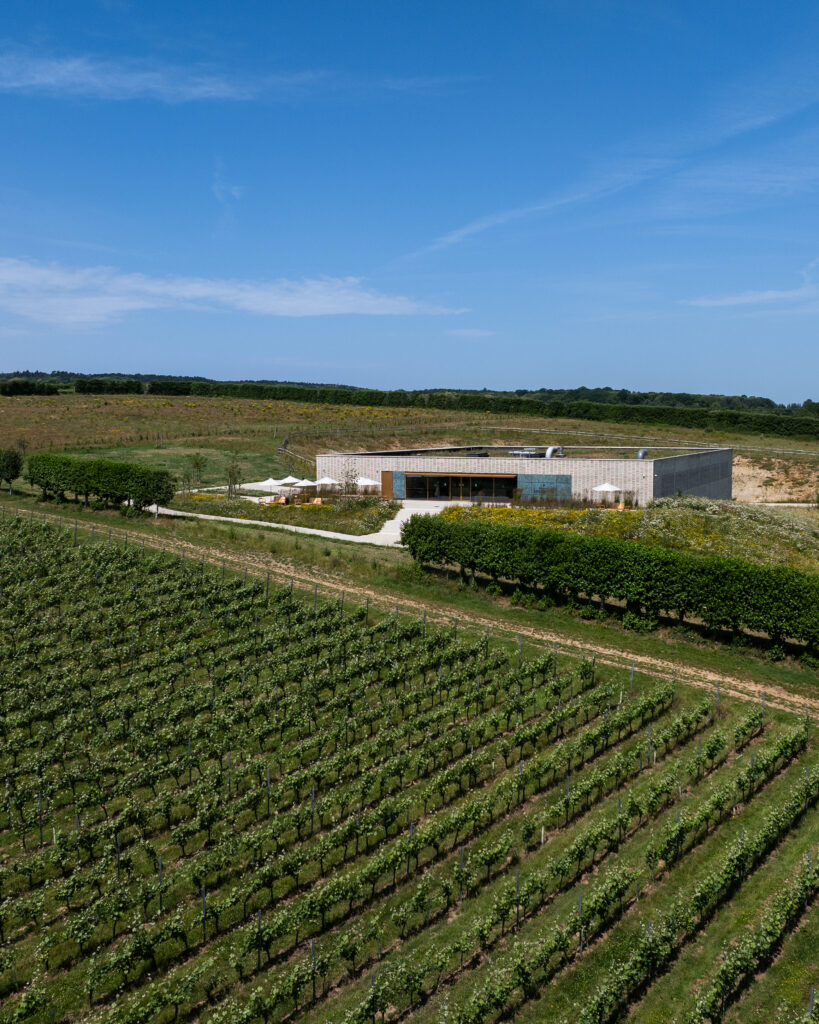
‘We can’t talk about 2026 without acknowledging the impact of climate change,’ he adds. ‘While warmer, drier summers have given us greater flexibility in how we grow and ripen our fruit, they have also challenged us to adapt our approach in both the vineyard and the winery.’ Simpson too adds that she has been concerned by the ‘uber-dry conditions’ and the threat of hydric stress, resulting in lower yields.
For now, though, with a surplus of wine on the market, lower quantity but higher quality may be no bad thing. Bridges, for one, cautions against over-reacting to a single vintage. ‘It’s easy after a hot season to assume this represents the new normal,’ she says. ‘But only two years ago we experienced an exceptionally wet and challenging season. Vintage variation remains very much a feature of English wine.’
Not a 67 Pall Mall Member? Sign up to receive a monthly edit of The Back Label by filling out your details below

WHAT
I’VE
LEARNED
Ed Carr, House of Arras

ON
THE
ROAD
Christina Kaigg-Hoxley in California

TWO
MINUTES
WITH
Kurtis Ogasawara, Robert Mondavi Winery