


WHAT I’VE LEARNED | Ken Forrester, South Africa
16 July 2026
In 1993, Ken Forrester, now 68, gave up a successful restaurant chain in Johannesburg to start out as a novice winemaker in Stellenbosch, focusing particularly on Chenin Blanc. He has since become the country’s leading exponent of the variety, most notably with his standout wine, the FMC
‘As a young man, my only plan was to travel the world, so I studied hotel management in the hope of being a purser on a cruise ship. But sanctions put paid to that, so I went into hospitality, and built a portfolio of five restaurants in Johannesburg.’
‘The USP was that each of them had a walk-in wine cellar where I’d take customers, and they’d invariably end up choosing a more notable wine than they might otherwise have. To build a strong wine list, I needed to source wines directly from the growers in the Cape – people like Charles Back at Fairview, Charles Withington at Rustenberg, the Finlaysons… So I made quite a few trips down there and I just fell in love with the place.’
‘In late 1993, my wife and I went to a wedding in Cape Town, and visited a few vineyards and farms. It was six months before the election that would see Nelson Mandela become president, and the country was in turmoil. White people were afraid of handing over to the Black population, and a lot of them were selling up and getting out. I said to my wife, “Let’s buy the biggest piece of land we can afford.”’
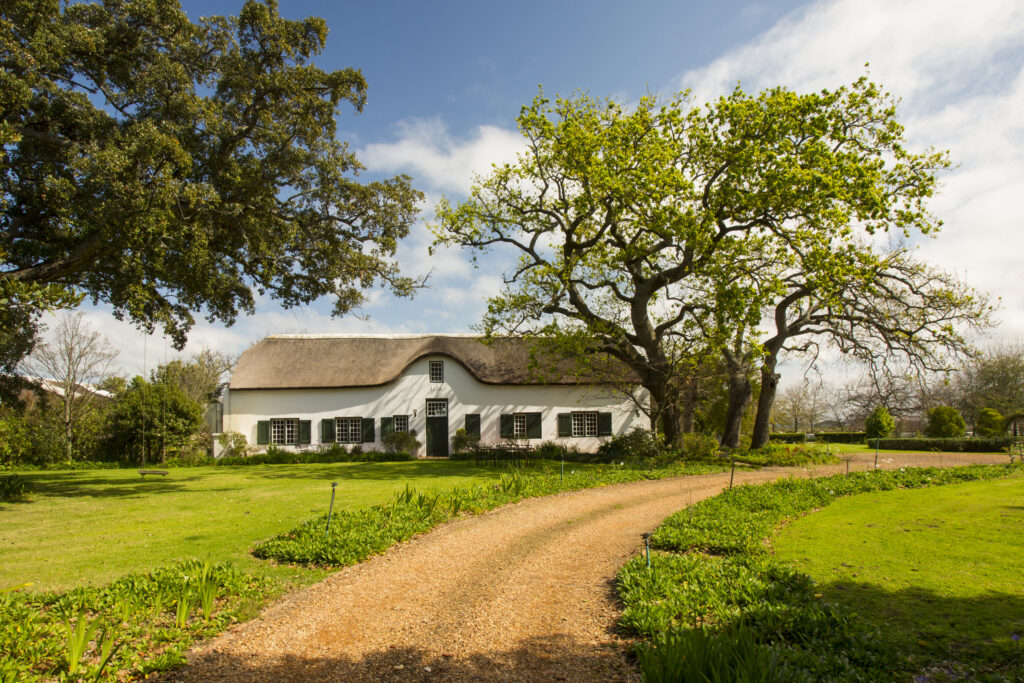
‘While we were there, we had a brai at Ruste en Vrede with [owner] Jannie Engelbrecht, who told me about this great old Dutch homestead that was for sale, dating back to 1694, with 38 hectares of vines. It was derelict, the roof had caved in, and the inside was under two inches of water. But it was absolutely beautiful. I bought it at auction a month later.’
‘The grapes were all going to the local co-op, under the jurisdiction of the KWV [the government-backed wine co-operative and industry regulator which set quotas for private growers and acted as an industry viticultural consultant]. The KWV’s advice was to get a bulldozer, take out the Chenin Blanc and plant Pinotage and Sauvignon Blanc instead. The Chenin vines that had been in the ground for 25 years and looked pretty good to me.’
‘Back then, wine production was completely governed by the KWV, and to make wine, you needed a quota. Quotas were given out on the basis that you went to the right church, you wore grey shoes, and you spoke the right language. It was very Afrikaans-dominated. To the locals, I was the fancy pants outsider, the Brit from Johannesburg [Forrester is of Scottish descent]. What could I know? I wasn’t Afrikaans.’
‘I made a connection with Bernard Germain [owner of Château de Fesles in Anjou-Saumur] and ended up doing five vintages with him in the Loire Valley. I would come back each year with barrels from his cooper and a bunch of ideas. When I started fermenting Chenin in barrel, the locals were like, “When you came from Johannesburg, did you get a return ticket? Because you’re not gonna last long here doing that.”’
‘There was a gap in the market for Chenin. Mike Dobrovic [of Mulderbosch] and Gyles Webb [of Thelema] had captured Sauvignon Blanc, Hamilton Russell had captured Chardonnay, but Chenin was overlooked. It was the underdog. So there was an opportunity to define it.’
‘If all the sheep are running towards me, I’m totally comfortable running back the other way. I don’t know that I’m right, but I’m not going to follow the herd. It’s a commercially-minded decision to a degree, but it’s also my own mindset.’
‘It was tough to start with. One of the first things I did was to open a winery restaurant, just to provide some cash flow because we had no income from the wine business. Eventually, Steve Daniel [the hugely influential buyer for UK retail chain Oddbins] got in touch to say he was coming to South Africa. We didn’t have a tasting room and the office was our spare bedroom, so we tasted with him in the dining room. As he walked out, he gave me a handwritten note of what he was planning to order. It was equivalent to everything I’d sold to date. It rescued the business.’
‘In 1997, I asked [business partner and then Vergelegen winemaker] Martin Meinert how we could make one of the world’s great white wines with Chenin Blanc. He told me we couldn’t, and we should use Chardonnay. I said, no, that’s the whole point. He was like, “You only just got here,” whereas my attitude was, “Well, is there a five-year waiting list?”’
‘We tried all sorts of things: acacia heads on the barrels; a special yeast from Champagne; various chemicals to help the extraction; settling agents, fining agents. At one point I was using my copper [golf] putter to stir the lees and remove the sulphide reduction that takes place in the barrel. The first attempt in 1997 was absolutely diabolical; ‘98 was undrinkable; by ‘99 I was blending all sorts of different barrels, adding a bit of Sauvignon Blanc, and we still made what I’d call a fish’n’chip shop wine. 2000 was a beautiful vintage, and I had to make it work, so I got on the phone to Bernard [Germain] and he said to me, “What are you doing? Why are you interfering? Leave the wine alone, take your ego out.”’
‘I took the wine to the London Wine Trade Fair in 2001, and gave it to [critic] Matthew Jukes. I told him it was something new we were working on called “Chenin Project”. He immediately asked me how we’d got it so rich, and what we’d blended it with. When I told him it was 100% Chenin, he said, “Well that is the most f***ing marvellous Chenin I’ve ever tasted.” So we called it FMC – the official line being that it stood for Forrester Meinert Chenin.’
‘South Africa was a tough sell in those days. Even today, I still think there’s a prejudice against South Africa. If I put “Sancerre” on my Sauvignon Blanc, I have no doubt I could double the price tomorrow.’
‘What are we doing in South Africa with Cabernet? Why is it very often a bit green and weedy? Why is it so phenolic? Why can’t we get more juicy fruit? I think there’s space to reprogramme the Cabernet Project in South Africa. But when I ask producers, friends, colleagues, who is the competitive set, they say Bordeaux. And I’m like “No, you’re dreaming! It’s Chile, Argentina, Napa…”’
‘You hear about restaurants struggling but they’re their own worst enemy. I went to a Jason Atherton restaurant in [London’s] South Kensington the other day. They had one Cape Chenin on the list, so I thought, OK, let’s try that. I didn’t know the brand, and when I saw it, it wasn’t even bottled in South Africa, so I had no way of knowing the producer. It was £38, which was a 500% mark-up on the wholesale price. That sort of greed hurts the entire industry. I wrote him an email telling him as much, but I never got a response.’
‘I hear that M&S might be abandoning Fairtrade. Good. For 15 years I’ve been saying to them, “Help me with the maths”. Fairtrade executives drive BMWs, have offices in fancy buildings in worldwide capitals and fly business class. They’re taking a small cut out of the farmer who’s trying to support his labour force, and running a first-world operation while putting money back into the community. How does that work?’
‘I’m not a climate change sceptic, but I don’t believe climate change is new. It’s been around for about five million years. Is it accelerated by cars, by planes? I don’t know. I’d like to imagine that the earth is resilient enough to deal with a little bit of carbon dioxide. We see climate change in the extremes, the unpredictability – not global warming. In 2018, Cape Town hotel guests were limited to one-minute showers and the city was a day away from running out of water. Three years later, our winery was under six inches of rainwater – and we’re not on a river. The drains simply couldn’t cope. How do you go from a drought to a flood? It’s those extremes that are going to hammer us.’
‘If you put natural wines into a formal wine tasting, 50% would be rejected as faulty. But those faults are being sold to the public as character. They’re not, they’re faults, and we avoid that in winemaking. Dirty Little Secret [Forrester’s top-end, oxidative, eight-vintage Chenin made in a solera system] is clean, tidy, proper winemaking. It’s called “Dirty” because it’s unfiltered but it’s crystal clear – it just throws a sediment because there’s a few solids in there.’
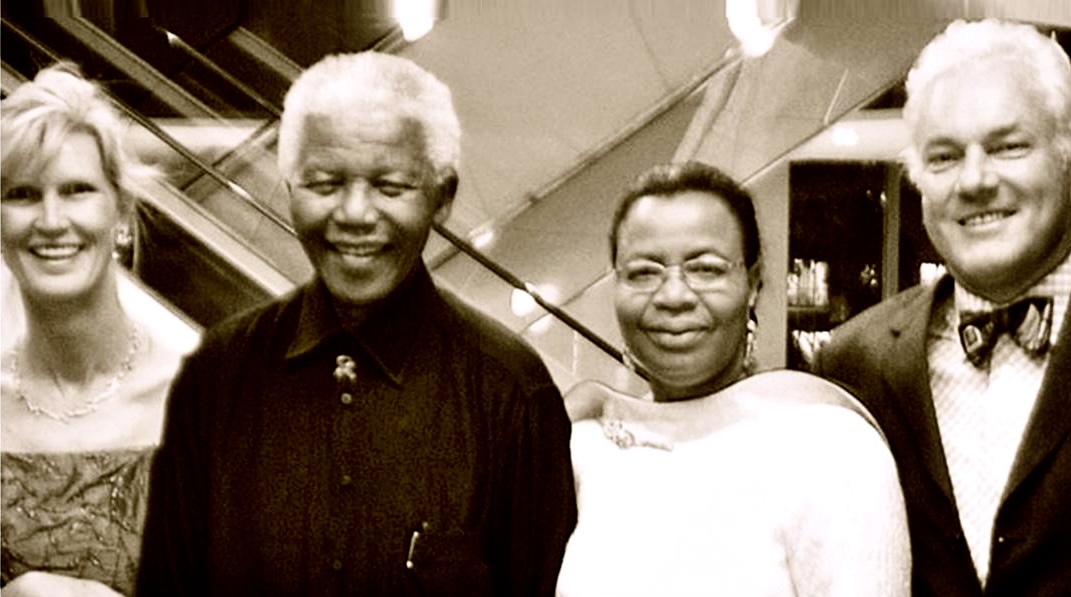
‘My proudest moment was when our wine was selected to be poured for Mandela’s 85th birthday celebrations. The night before the main event there was a private party for family and friends. Suddenly, I heard that voice, right there at our table. “I believe I owe somebody a debt of gratitude for the wine this evening.” I couldn’t get up fast enough, but my legs gave way and I couldn’t stand. Then my throat blocked up and I couldn’t speak. I was completely overcome. He ended up sitting down and I managed to regain my composure and we had a nice chat for about 10 minutes – but not without tears running down my face.’
Not a 67 Pall Mall Member? Sign up to receive a monthly selection of articles from The Back Label by filling out your details below
TWO
MINUTES
WITH
Armand de Maigret, Screaming Eagle
MEET
THE
SOMM
Max Melvin
ON
THE
ROAD
Martijn Brouwer in Verona