


UNDER THE SURFACE | A wine like no other
19 June 2026
Frescobaldi is among the biggest names in Italian wine, a noble family whose aristocratic Florentine roots can be traced back over 700 years and whose holdings include such acclaimed names as Ornellaia and Masseto. So what is it doing making a wine with convicted criminals on a remote part of the Tuscan archipelago? Guy Woodward visits an astonishing island vineyard
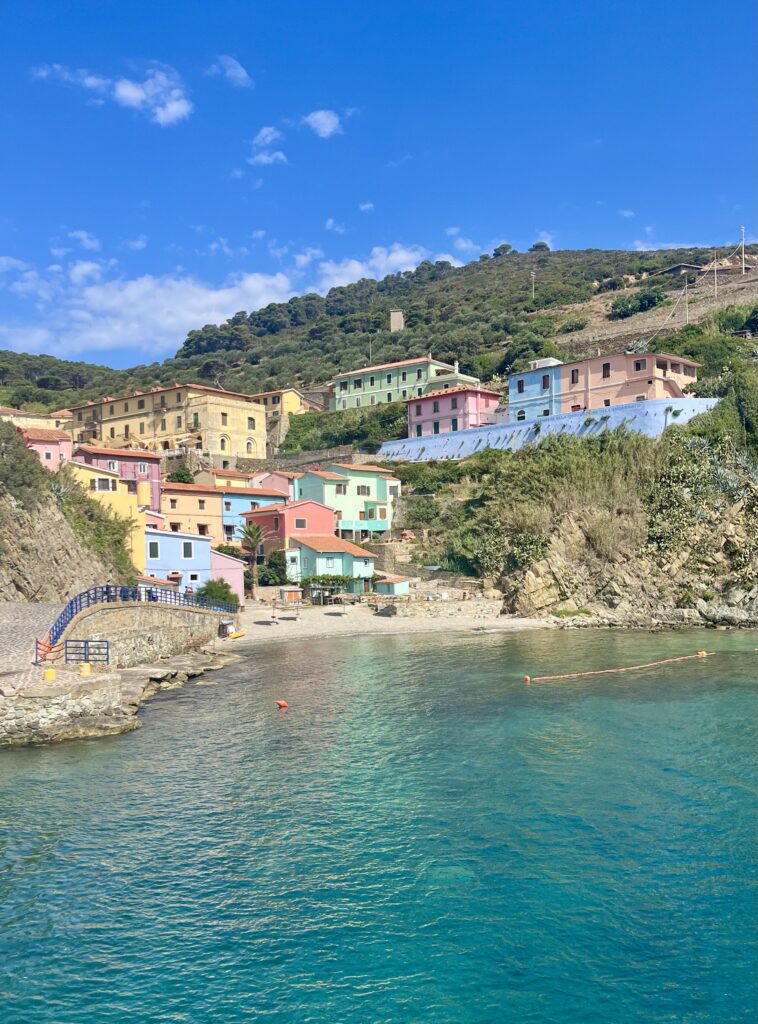
As the boat approaches Gorgona, the smallest island of the Tuscan archipelago, we are greeted by a picture-perfect Ligurian scene. The bright colours of the holiday homes overlooking the bay are reflected in the translucent water, the lapping of the waves the only sound to break the silence. Neither is there anything to interrupt the view out to the horizon. The only sign that we are not arriving for the most idyllic of breaks comes via the welcoming party lined up on the dock – four prison guards.
Gorgona, 20 miles off the Livorno coast – and about twice as far from the Napoleonic exile of Elba – is Europe’s last remaining island penitentiary, in operation since 1869. And beyond the prison and those handful of shoreline houses, there is nothing else of note (nor any visitors) on the island – save for a rather special vineyard.
In 2012, the costs of running such a remote facility had rendered it unviable, to the extent that it was at risk of closing. As a last resort, the prison director contacted close to 100 Tuscan wineries, seeking to raise funds by way of a partner for its then one-hectare vineyard, originally planted in 1999. The only one to reply was Lamberto Frescobaldi. ‘It was August, so I think everyone else was on holiday,’ jokes the 63-year-old president of the venerable Tuscan producer.
‘These people have already been judged once. Who are we to judge them again?’
LAMBERTO FRESOBALDI
The noble Florentine family has been making wine since 1308, in between times serving as bankers to English kings and patrons to Renaissance artists. Lamberto Frescobaldi is the 30th generation to oversee its vineyard holdings, which today span SuperTuscans Ornellaia and Masseto as well as Castello Nipozzano in Chianti and CastelGiocondo in Montalcino, among others.
Frescobaldi pays the prison around £100,000 a year to rent the vineyard, and engages a handful of prisoners to tend the vines, overseen by its viticultural team. The aim, besides making a wine that, for once, justifies the term ‘unique’, is to aid the prisoners’ rehabilitation, preparing and arming them for their reintegration into society.
Inmates are sent to Gorgona as a reward for good behaviour during the main part of their sentences, spent in prisons on the mainland. The idea is that they see out the final year or two of their term here, during which they are given paid work in a rural environment, in the hope they are equipped to find jobs in the same sector when released.
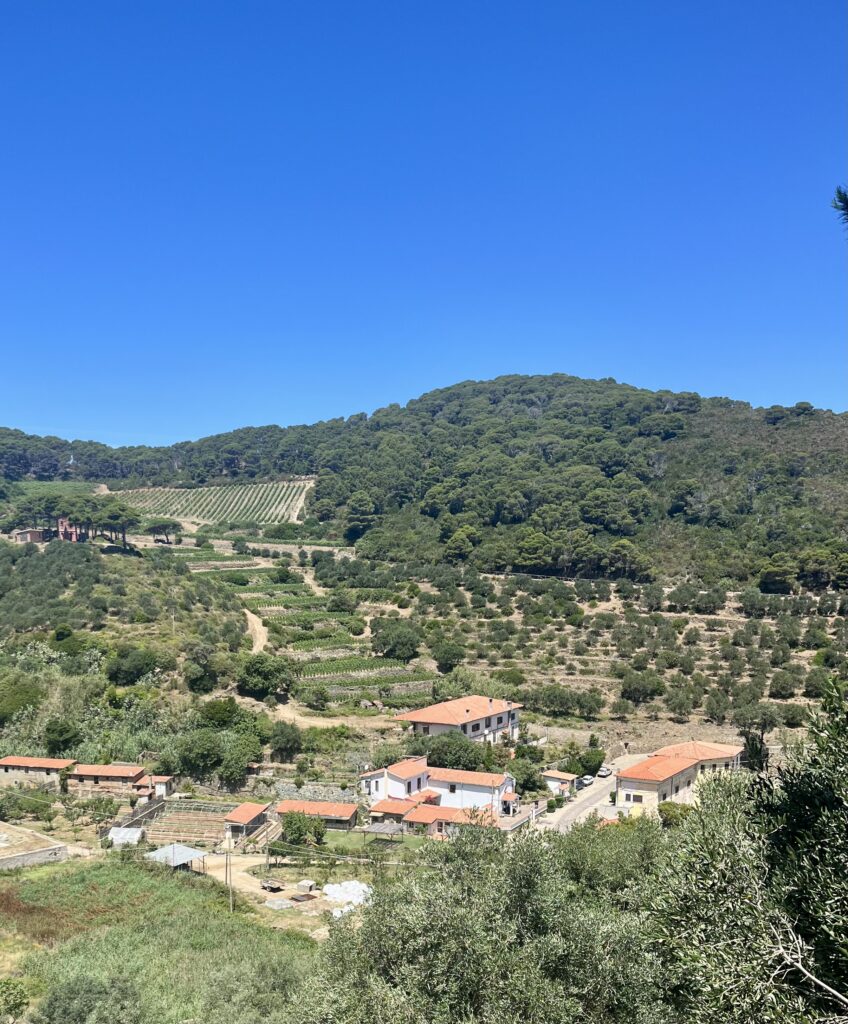
Aside from the vineyard, the island is home to cows, pigs and other animals, a large vegetable garden and olive trees. It is the vineyard, though, that is the coveted assignment. There, inmates are paid by Fresobaldi (at a rate of €12 an hour, compared to the government rate of €4 for non-commercial work) so that, when the time comes, they not only have some skills on their CV, but some money in their bank account.
The hope is that such a leg-up allows them to follow a new path rather than falling back into a life of crime. ‘The rate of recidivism around the world is around 80%,’ says Lamberto Frescobaldi. ‘Here, among those prisoners who have been employed on release, it is close to zero.’ To prove its commitment to such aims, some of the Gorgona inmates have even gone on to be employed at Frescobaldi.
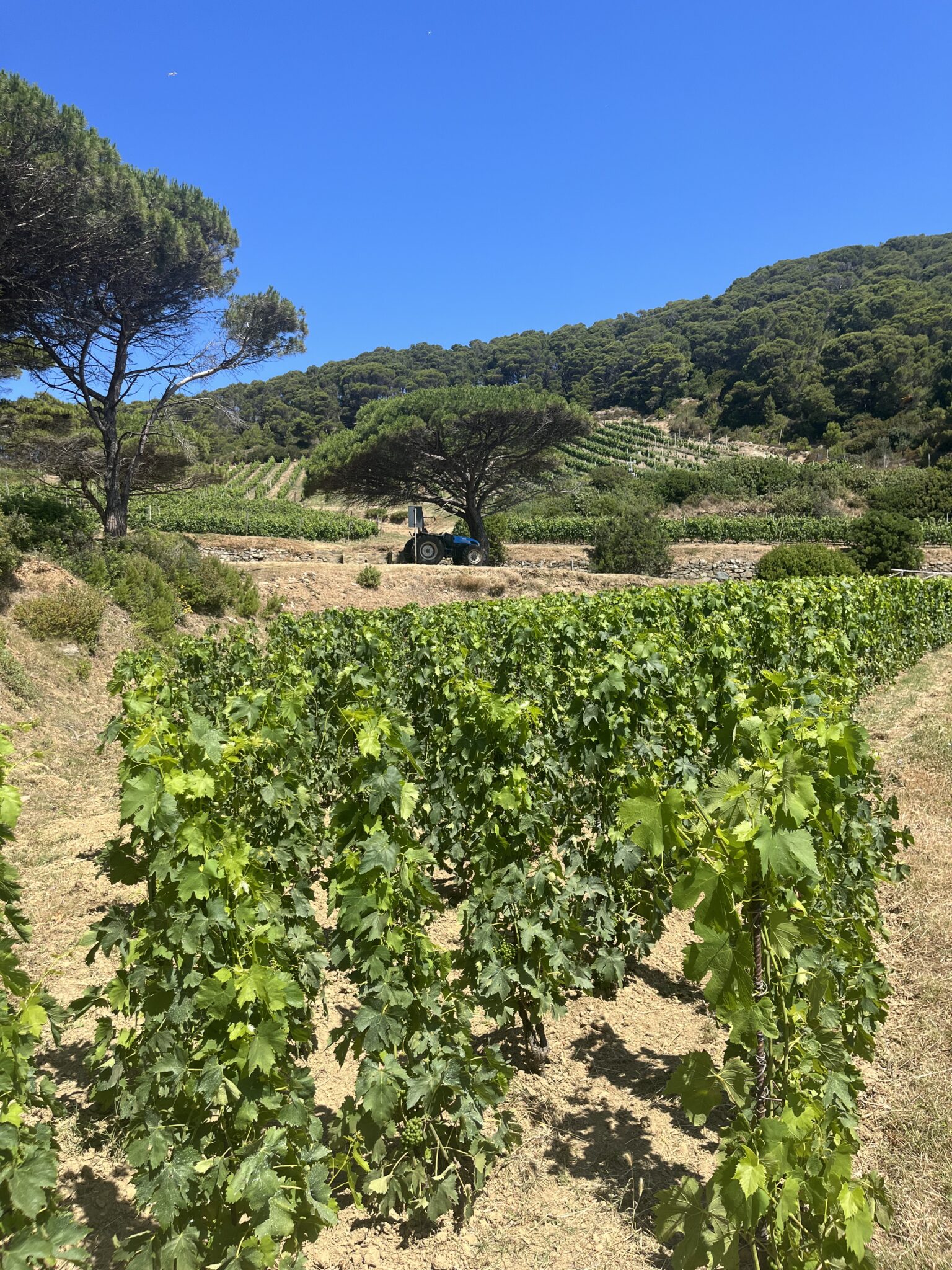
‘When you enter prison, the concept of time changes completely,’ says Frescobaldi. ‘Days bleed into one another, you lose the rhythm of the seasons, even the sense of anticipation and the future. In the vineyard, it is the opposite. The vine changes every single day; it demands constant attention, care and presence. It is a craft that restores to inmates an authentic, more human sense of time.’
All the prisoners at Gorgona have been found guilty of serious crimes; sentences of 15-20 years are not uncommon. But, says Frescobaldi, ‘One day they will be released. We have to accept that. Is it not better to try to rehabilitate them, so that they are a help not a hindrance?’ He makes the point that every prisoner in an Italian jail costs taxpayers £200 a day. ‘We are proud of doing something for society,’ he says.
Frescobaldi also makes the point that most serious crimes are committed when the perpetrators are young, meaning that even after serving 20 years, many will be released with a significant part of their life still ahead of them. But most prisoners are in a vulnerable place at such a juncture. ‘Think how much will have changed in those 20 years – how little you know, how little you are prepared, with a lack of social or professional skills, a lack of money, connections… You are vulnerable to being coerced back into a life of crime. Instead, we give them a second chance.’ Of the 80-odd prisoners to have worked on the vineyard since 2012, 16 have gone on to get jobs with his company.
There are around 100-120 prisoners on the island at any one time. It is the prison officials who select the handful deemed suitable for vineyard work, with one or two selected to help in the small, spartan cellar. Frescobaldi then trains them in the various disciplines required and allocates tasks accordingly to those who have shown the most aptitude.
Piero, 39, has served ten years of a 12-year sentence, and is approaching a time when he is eligible for day release to Livorno. He was selected for vineyard work on account of his previous experience at his family farm in Piedmont (notably being a qualified tractor driver) and has since proven himself an expert pruner. ‘Working in the vineyard is a great opportunity for me,’ he says. ‘I have learned new skills in a different area of agriculture. And for those hours when I am working, I feel a little bit of freedom.’ He hopes to go back to Piedmont when he is released, to work in his family’s farming business.
For prison director Maria Grazia Giampiccolo, ‘It is not easy to coordinate prisoners working on a vineyard, but we have had some outstanding results. And I am not talking about the wine – I am talking about the people’. The logistics are equally complicated from Frescobaldi’s perspective. Its winemaking team, headed by long-serving technical director Nicolò d’Afflitto, make the 90-minute boat trip from Livorno (itself two hours from Florence) on a weekly basis at the height of the season. Bringing equipment from the mainland is not straightforward; the weather doesn’t always comply; and prison guards are entitled to impose restrictions on prisoners for disciplinary reasons, meaning extra manpower is sometimes needed from the mainland. And while the climate on the island is fairly consistent, ensuring harvest almost always starts in the first week of September, it can be a drawn-out affair, with the main white grape, Ansonica, a late-ripening variety.
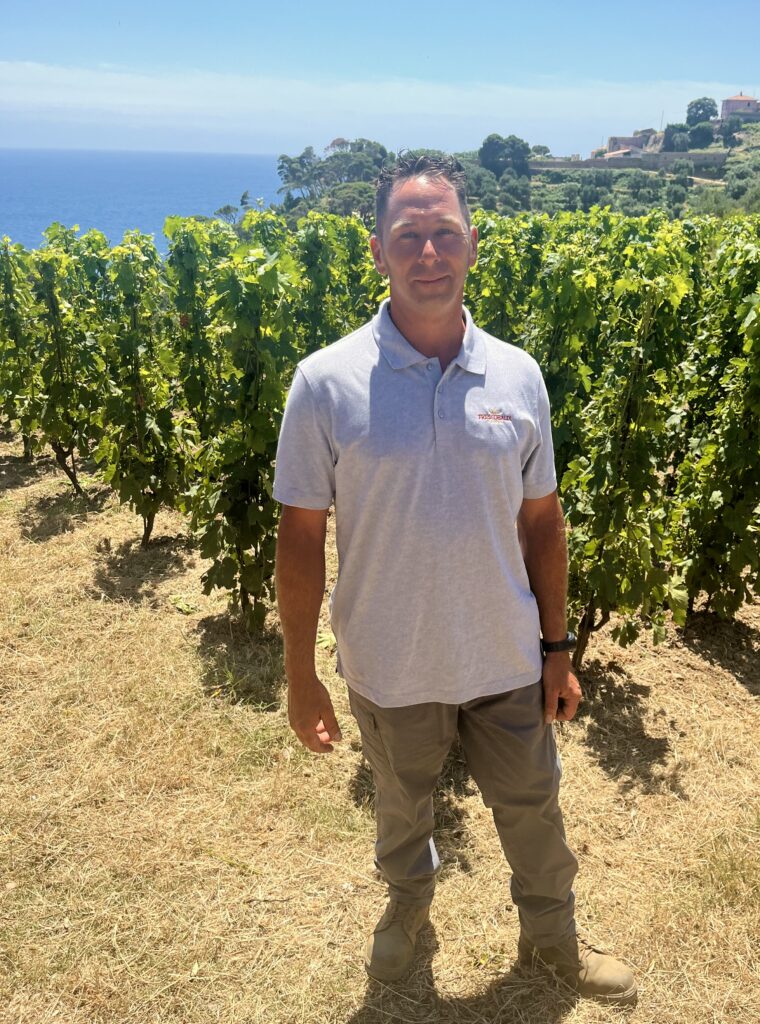
For d’Afflitto, a line has to be drawn between any benevolence he feels on account of the project’s ultimate aims and the reality of his workforce’s status. ‘I was told by the guards not to be too nice to them,’ he says. ‘I have to remind myself it is a prison.’ Even so, he says the prisoners are generally attentive, diligent and hardworking – and, most importantly, keen to learn. ‘The training is the most important element,’ he says. ‘Once they understand what we are trying to do, they work hard.’
For Frescobaldi, the motivation behind the project is not commercial. The group produces almost 10m bottles of wine a year across its various brands. Gorgona yields just 10,000. And while the white wine sells for £120 (at upscale store Hedonism, for those in London), its takings barely clear expenses.
The original one-hectare vineyard, planted to Ansonica, a variety more commonly found in Sicily, was expanded in 2015 with new plantings of Vermentino, overseen by Frescobaldi but carried out by a team of prisoners. In 2017, a small plot of Sangiovese and Vermentino Nero was added, for a tiny production (not much more than 1,000 bottles) of a red wine. The prisoners are also responsible for building and maintaining the dry-stone walls that support the terraces of the steep vineyards, which now span 2.5ha.
As for the winemaking, the grapes are pressed on the island, the must then put into refrigerated tanks for the start of fermentation which is completed in old oak barrels where the wine is held for a few months, before being shipped to the mainland for further ageing (in terracotta amphora) and bottling.
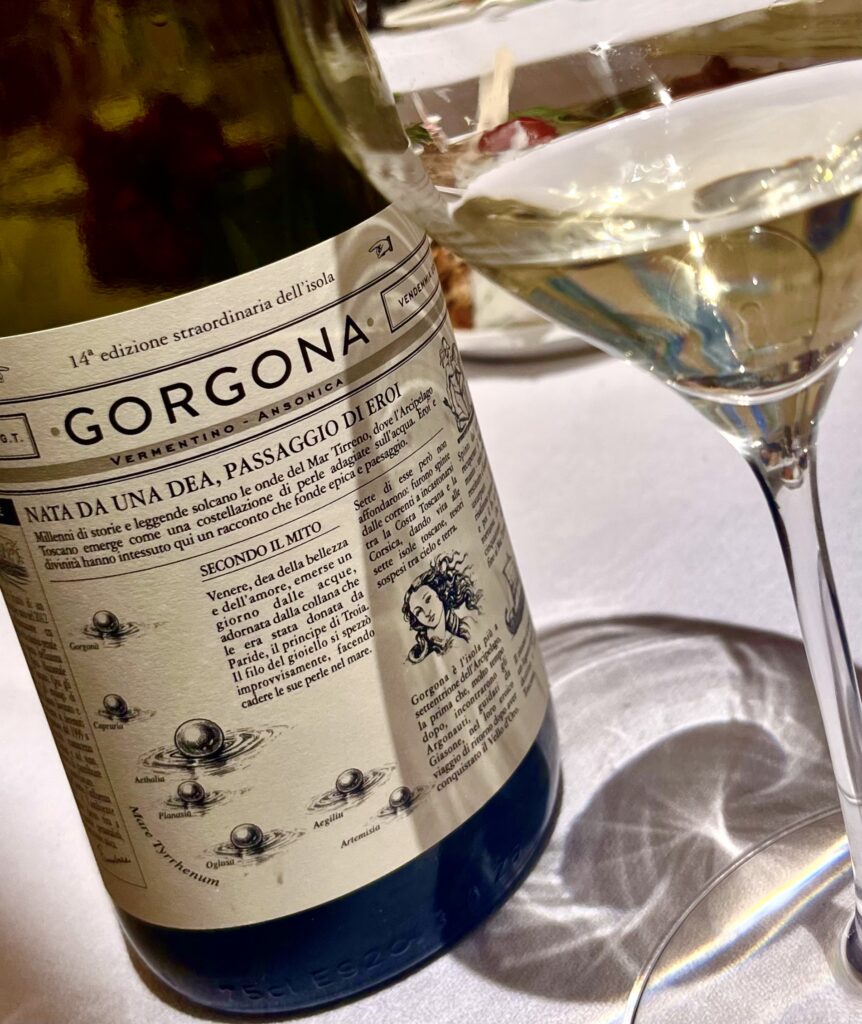
There is a striking floral salinity to the wine, which d’Afflitto says comes from both the wind and the soil. ‘The wine has a wonderful backbone,’ he says. ‘But it is more than a wine. It’s about sending a message to the world.’ It is also, according to Nelson Pari, former Club Sommelier and now Italian buyer at importer SWIG, one of Italy’s five best whites.
It is a wine and an undertaking that holds particular resonance to Frescobaldi. ‘We offer these individuals not just employment and a wage, but an opportunity to find balance, dignity and a new perspective for their future,’ he says. It has also given him a new perspective. ‘Psychologically, it’s been a wonderful experience,’ he adds. ‘It’s made me more humble. When luck smiles on you, you owe it to the world to give something back. These people have already been judged – who are we to judge them again?’
Not a 67 Pall Mall Member? Sign up to receive a monthly edit of The Back Label by filling out your details below
WHAT
I’VE
LEARNED
Ken Forrester, South Africa
ON
THE
ROAD
Martijn Brouwer in Verona

TWO
MINUTES
WITH
Armand de Maigret, Screaming Eagle