


ON THE ROAD | Paul Richards in Oregon
17 September 2025
Paul Richards (right) with Guillaume Large, winemaker of Louis Jadot’s Résonance Vineyards (left) and Jay Boberg, whose Nicolas Jay is a joint venture with Burgundy’s Méo-Camuzet. Photo: Easton Richmond
This summer Paul Richards, the Club’s Global Head of Wine and Spirits Purchasing, headed to Oregon for the first time, to learn more about the state’s Pinot Noirs – though it was the Chardonnays that almost ended up stealing the show…
With the rising price of Burgundy, more and more Members are keen to explore alternatives from other regions. Oregon Pinot Noir has been in the UK market for a while now, but it’s gaining more and more plaudits for hitting that sweet spot of cool-climate elegance with fullness of flavour, without drifting into the fruit-bomb style you sometimes see.
We already had quite a few Oregon Pinots on the list at the Club – some from the original pioneers like Eyrie Vineyards and Domaine Serene; some from the clutch of Burgundy-owned producers, like Drouhin and Résonance [owned by Louis Jadot]; others from joint ventures such as Nicolas Jay [part-owned by Meo-Camuzet]; and Lingua Franca [run by Larry Stone MS and Dominique Lafon] and more recent arrivals such as Antica Terra [the project of Maggie Harrison, formerly of California’s Sine Qua Non].
I’d been keen to get out there to discover more, though it was one of those regions that sit on a bucket list but aren’t quite ‘must-visit’ and aren’t really do-able on a family holiday either. Then a contact, Emily Jago of the restaurant group JKS [Gymkhana, Hoppers, Sabor], mentioned the Oregon Pinot Noir camp. It’s a trade event connecting buyers with producers for a series of winery visits, seminars and tastings. You have to be invited, but it just so happened that Jay Boberg [the former music exec who is the other half of Nicolas Jay] came into the Club shortly afterwards to meet the team – so when he also mentioned it, I was only too happy for him to put me forward.
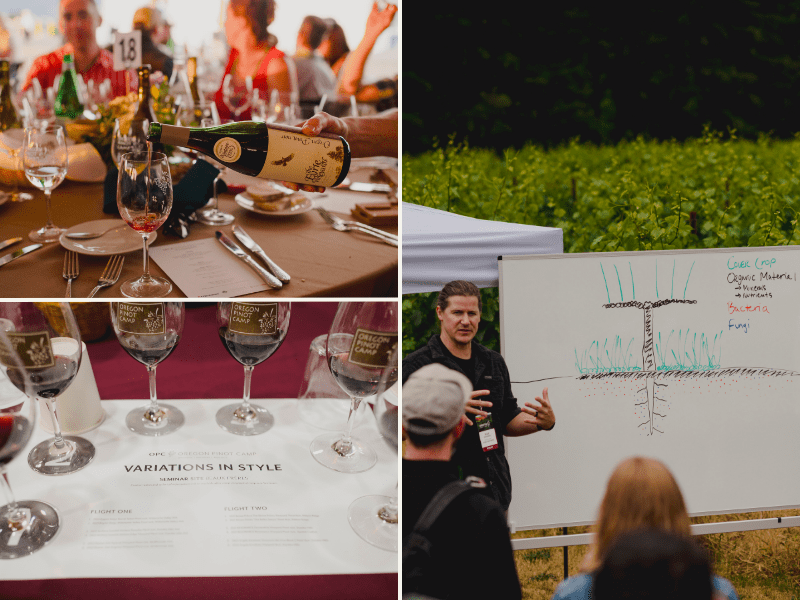
There were around 200 guests at the camp, from all over the world – I was in a group of 20 with Danish, Japanese, Norwegians, Mexicans and Canadians (though with the impact of recent tariffs, the latter told me, US wines are a tough north of the border). We started in Southern Oregon, just over the state border from northern California, and wound our way through Eugene via a few interesting spots. None more so than Troon – a biodynamic, holistic enterprise farming everything from apples to chickens, and producing some pretty funky, but very good minimal-intervention wines – if not quite in the 67 style…
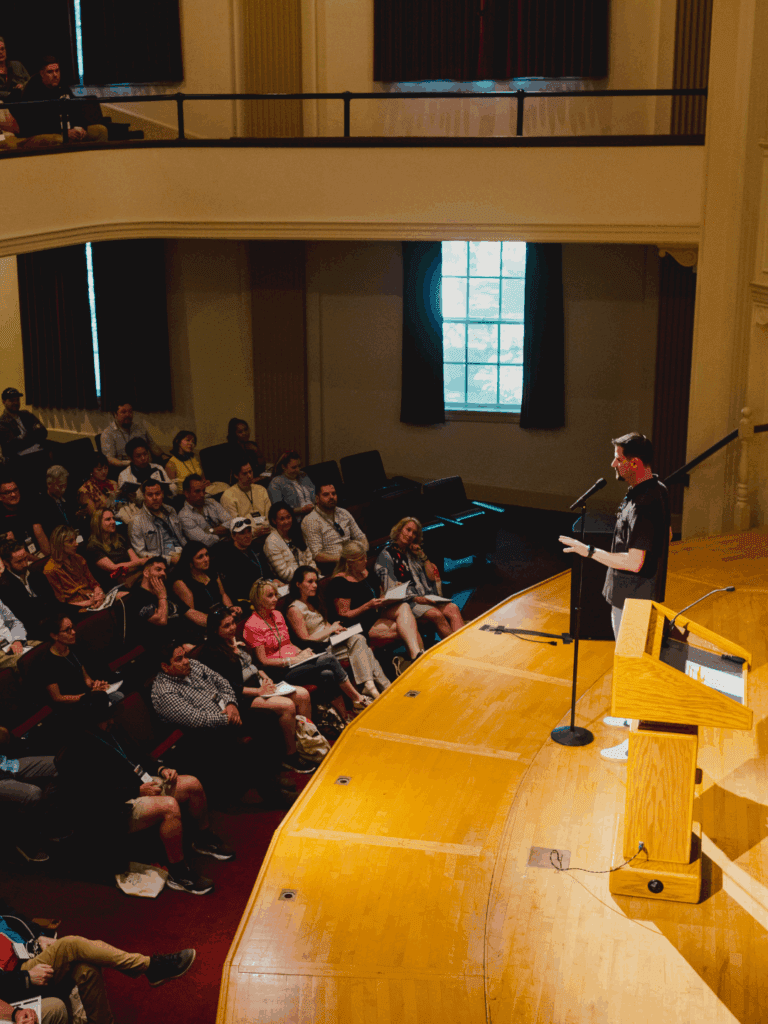
From there, it was off to the camp proper. I felt like I was back at school when we boarded one of the classic yellow buses to hear Eyrie’s Jason Lett deliver a geology seminar in one of the lecture theatres on the Linfield University campus in McMinnville. I must admit that much of the talk of tectonic plates, flood events and marine soils has since evaporated, but it did provide some useful context for the diversity of terroirs that we would see in the wines.
Most of the top Pinot producers are also making Chardonnay, and I’d go so far as to say that Chardonnay might ultimately be the variety to really make Oregon’s name. Again, the category is not a secret, but to me it’s still underrated. We saw quite a variety of styles, dictated by the winemaker as much as the terroir, but in general the best marry racy acidity and energy with a generosity of fruit that isn’t quite as overt as somewhere like Sonoma. They make for a fine alternative to some of the Burgundy satellites.
The Pinots showed an equally wide stylistic variety, with some richer than others, and quite a few single-vineyard wines. I gravitated more to those letting terroir speak rather than those with heavy toast and hands-on winemaking; the very best bore comparison with a good Vosne-Romanée. I was particularly impressed with Granville and Cristom, and ordered some of their wines when I got back to London, along with a few more Eyrie and Nicolas Jay – do give them a try in the Club.
The other notable crop in Oregon is cannabis. None of the winemakers owned up to growing it, though one did express concern that the flower from the plant might travel in the air and taint his vines. I’m pleased to report I didn’t find any trace in my tasting notes…
Jay Boberg and Jean-Nicolas Méo of Nicolas Jay will be hosting a Member tasting of their wines at the London club on Thursday 23rd October. Full details to follow…
Not a 67 Pall Mall Member? Sign up to receive a monthly selection of articles from The Back Label by filling out your details below

TWO
MINUTES
WITH
Armand de Maigret, Screaming Eagle
WHAT
I’VE
LEARNED
Ken Forrester, South Africa
UNDER
THE
SURFACE
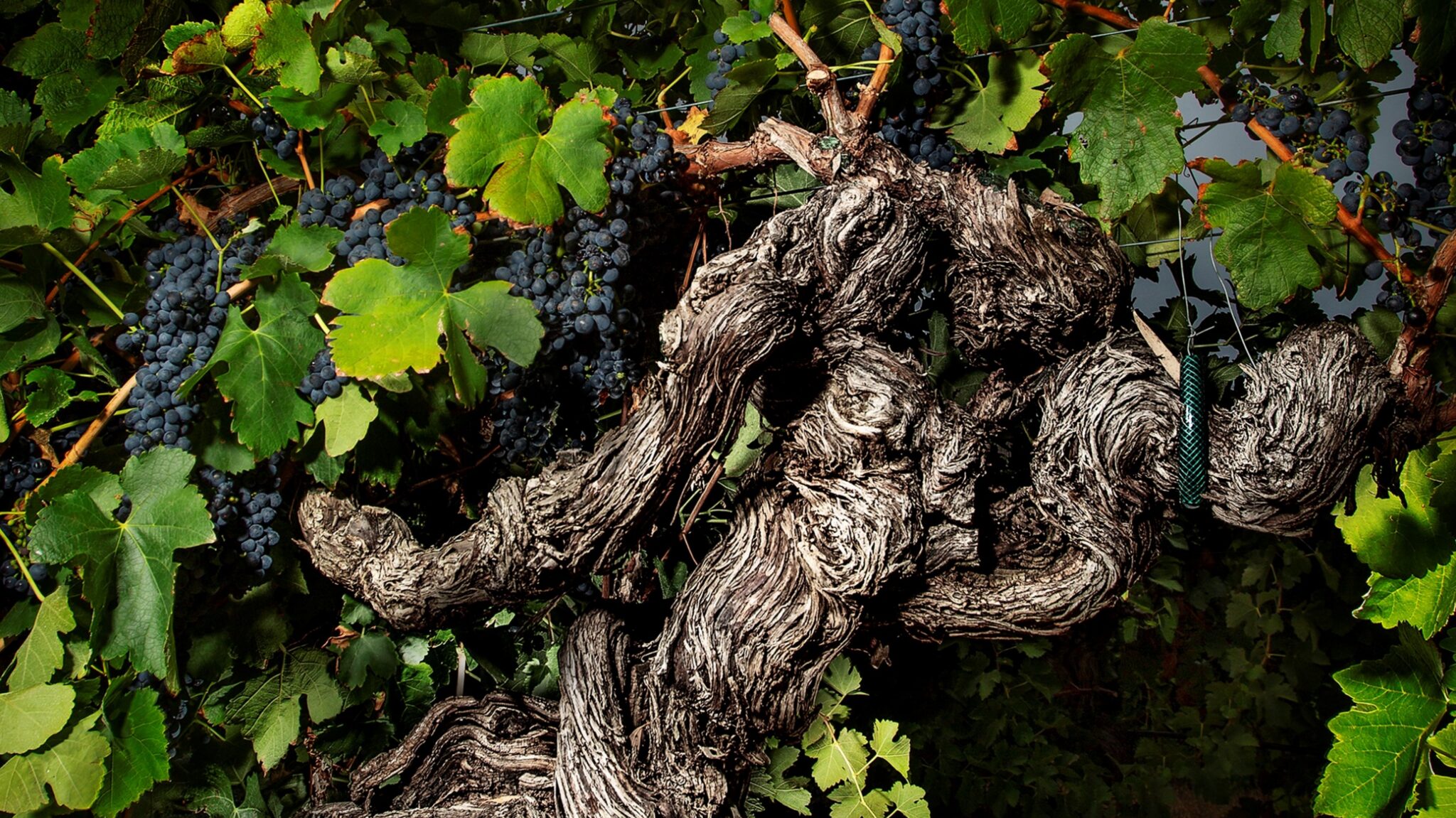
Why the fuss over old vines?