


WHAT I’VE LEARNED | Laurent Ponsot
23 January 2026
Laurent Ponsot was the much fêted fourth-generation winemaker at Burgundy’s Domaine Ponsot, before shocking the wine world in 2017 by quitting the family business to launch his own eponymous negoçiant line. While at Domaine Ponsot, he fought a long-running campaign to expose the spate of counterfeit wines at auction, ultimately leading to the conviction and imprisonment of fraudster Rudy Kurniawan. Today he runs Laurent Ponsot with his eldest son, Clement
‘I don’t worry about climate change at all. We’ve been farming vines for more than 2,000 years in Burgundy, and during that time, we have had heatwaves. During the 1930s and the 40s, the Domaine Ponsot wines all had an alcohol level above 14%, sometimes 15%. My grandfather was already recording the temperatures back then, and over those 20 years, every summer had at least one week where it was over 40˚C. The only reason these weren’t great vintages was because it was nearly impossible to control the temperature of the vats, so one year in two, they produced vinegar.’
‘Today we are in a heatwave. And while I am not happy for planet Earth, it is great for Burgundy. The last bad vintage we had was 1984. But it’s a phase. I refuse to call it global warming. We have higher temperatures all over the planet right now, yes, but nature is so strong, and one day it will go back to a colder phase. We focus on it too much in the wine world. But common sense doesn’t exist anymore. We’re not going to plant Grenache or Syrah in Burgundy.’
‘I’m so attached to Mother Nature that I don’t want to interfere with her if I can help it. But if she needs help… In 2024, for example, when it was very wet, it was impossible to farm organically or biodynamically. Anyone who did so made zero wine. It’s like human beings. I lead a healthy life. I drink well, I eat well, I do some exercise. But if one day the doctor says, “You have a disease. Unless you take this pill, you will die.” Well, I don’t want to know what’s in the pill – I take it immediately.’
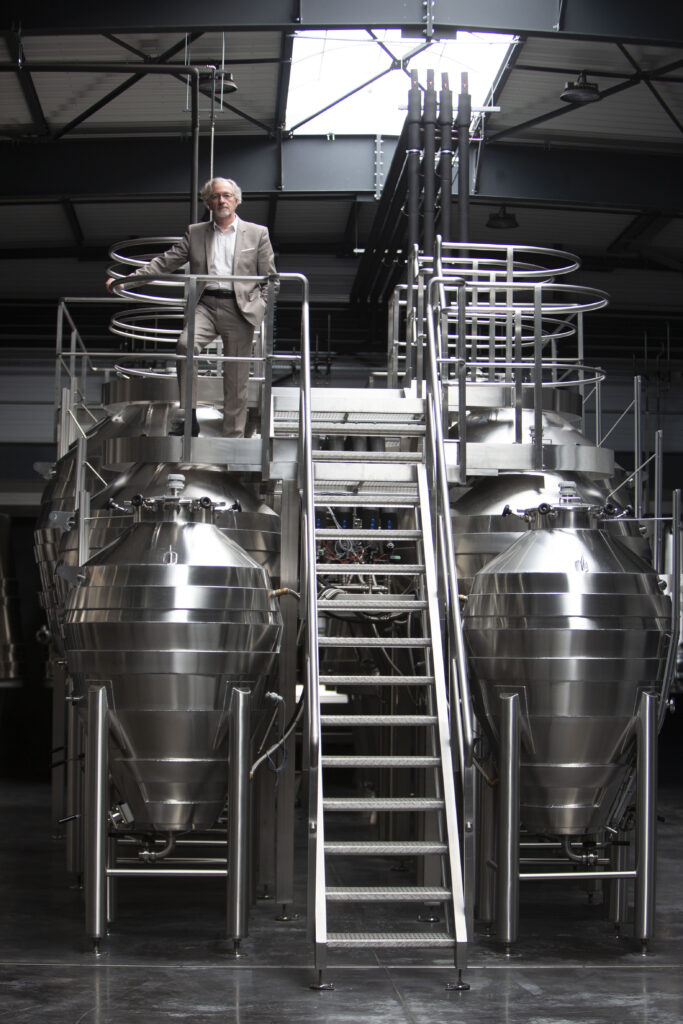
‘It’s the same in the winery. You don’t take aspirin every morning thinking you might have a headache during the day. So why would you put systematically put sulphur dioxide in a barrel if the wine is healthy? We have a brand new winery, very avant-garde, with a lot of technical tools to avoid too much manipulation. Every barrel is analysed every month. If there is a problem, we know it is just from the last month, so we can cure it.’
‘I invented a closure called the Ardea Seal [made from three types of polymers, to allow for a limited flow of oxygen but avoid cork taint]. It’s perfect. But in Burgundy, very few people use it because it’s plastic. To them, it’s all about tradition and image. It’s ridiculous. These people, they don’t drive a 2CV anymore. They drive cars with ABS, with air-conditioning. But they still want a natural cork.’
‘In Burgundy, we have big problems in the market. It’s so easy to sell a Bourgogne Blanc, a Bourgogne Rouge, but so difficult to sell a Chambertin Clos de Bèze. It’s crazy – not so long ago, we couldn’t make enough grand cru wine. But the price of grapes has reached such a crazy level, that even if I don’t want a big margin, I have to apply all the costs to a bottle, and it means that we are too expensive. Everybody is too expensive. Most grand cru Burgundy is drunk by people who know nothing about wine.’
‘The first time I made a Montrachet, I bought the grape must for €42,000 a barrel. That was 15 years ago. Today it’s €200,000.’
‘I’m not happy with the situation. Prices have to come down. I want to produce wines that people can open and enjoy. But it is the very rich [corporate] investors who shape the market. They came down to Burgundy and pay 10 times the real value of the land to ensure they get the vines – even if it takes them 100 years to pay it back. It’s insane.’
‘In France we have an inheritance tax based on the value of the land, which is based on the last relevant transaction. So if you own Clos de La Roche, for example, the inheritance tax is based on the recent sales of Clos de Tart or Clos des Lambrays. How can you pay the tax at that level? It’s impossible. So what do the next generation do? They sell. And who is buying? The corporate investors. That’s why the wines are so expensive.’
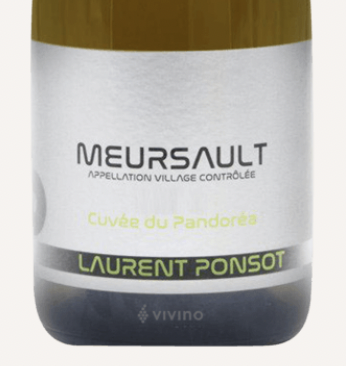
‘At Domaine Ponsot we were known for the grands crus, which made up 80% of the production. Since I started Laurent Ponsot, I enjoy having more freedom. Initially, I had one big idea – to produce everything that we can, from basic Bourgogne to grand cru. I wanted to be a bit like Champagne, where the best wines don’t come from a single vineyard, but from a blend. So none of our village wines come from a single vineyard – they are all from a minimum of two plots? We use 15 plots in our Meursault.’
‘I don’t know what they are doing today at Domaine Ponsot [the family domaine which he left in 2017, and is today run by his sister, Rose-Marie]. I have no link with them anymore.’
‘When I started my own line, I wanted to break the codes. I went quite far, with the NASA-type label. I knew I had to do something radical to show my thinking. I hate the word tradition, but I like the word history. And inside the bottle, you have to have a piece of history. But outside, you have to evolve the history through design, and I’m bored with old type or pictures of horses or a chateau. We’re not in the Middle Ages anymore.’
‘I’m changing the design for the 2025 vintage. We have so many laws from the European Union, and we have to include so many things on the label. It’s ridiculous, all this bureaucracy. So the new label will have all that technical information on the front, including a QR code or whatever. And on the back we will have a nice label. I am not a fan of the EU – it’s worse than the Soviet Union in the old days. I love Brexit. We should do Frexit.’
‘I will be 72 this year, but I have so much energy. I feel I could work for another 30 years.’
‘I used to be a hippie. I like community and sharing. Not only love, but many things. Inside, I am still a hippy. I want to be kind and to help everyone, to talk and exchange ideas. But I found that people are so focused on themselves, so I gave up. Human beings are not always nice.’
‘Rudy Kurniawan [the counterfeiter found guilty of forging and selling multiples bottles of wine at auction] could not have got the money together to do what he did on his own. He must have had accomplices, people who were in on it. But in the US, when a witness decides to talk, they are protected. Even if they’re part of the problem. I’ll leave you to read between the lines…’
‘When I went to the sale [the Acker, Merrill & Conduit auction at which bogus vintages of Domaine Ponsot that had never been produced were among the lots] I knew being there in person would make it a bigger story. That’s why I went. But it was also about the principle. I had to do it. The attention became too much, though. I should never have had to do that all myself. I had no support from anyone. Some of my colleagues came to the trial, but after everything was done, the only phone calls I had to thank me were from people in Bordeaux.’
‘Auction houses will never be able to totally guarantee that the wines they’re selling are genuine. You cannot control the provenance. And what is more important than the provenance? What is more important than the way the wine has been stored? Even the likes of Christie’s and Sotheby’s, which I trust, cannot control everything. It’s impossible. I would never advise anyone to buy wine at auction. For me, they should stop selling wine.’
‘The book [FBI – Fake Bottles Investigation, Ponsot’s account of the case] was a way for me to put a full-stop on the story, and to show people that the guy who did this is not a hero. He’s a crook, a shit.’
Not a 67 Pall Mall Member? Sign up to receive a monthly selection of articles from The Back Label by filling out your details below
TWO
MINUTES
WITH
Alice Tétienne, Champagne Henriot
UNDER
THE
SURFACE
Samantha O’Keefe – Lismore Estate Vineyards
MEET
THE
SOMM
Shirley Tan