


UNDER THE SURFACE | The fire inside
21 February 2026
Twenty years ago, Samantha O’Keefe found herself a single mother in a foreign country, a novice winemaker invested in a winery and vineyards in a region with no vinous heritage. And that was far from the biggest challenge she would go on to face. Guy Woodward tells what he says is the most astonishing story of his wine-writing career…
On both occasions that I’ve interviewed Samantha O’Keefe, she has ended up in tears. I don’t think this is due to my interviewing technique. In truth, on the latest occasion, I was almost in tears myself. Because it is no exaggeration to say that hers is the most affecting story I have encountered in my 20-odd years of writing them…
Let’s start with a bit of background. O’Keefe is a Californian who grew up in Los Angeles, studied at Berkeley and went straight into a comfortable career in TV. So far, so normal. But something was missing. ‘I was working for Paramount, in a world where people loved what they did, and I’d be in the green rooms surrounded by famous people and I just literally couldn’t care less. I was like, “What am I doing here?”’
O’Keefe had studied international development, which included a semester spent traveling the southern hemisphere by sea, taking classes on board and stopping off in various third-world countries. On a journey from Brazil to Cape Town, the voyage was joined by Archbishop Desmond Tutu, who proceeded to play table-tennis with the students in between giving lectures. This was immediately prior to South Africa’s 1992 referendum to end apartheid, on which 69% of the country’s white population voted in favour. ‘I called my dad from Cape Town and said, “I’ll live here some day.”’
‘The older I get, the less
SAMANTHA O’KEEFE
sense the story makes’
That day came several years later when she quit her job in TV, ‘met a guy’ and floated the idea of a trip to Africa, to which his response was that he had nothing better to do, so why not. (‘Note to young women,’ she adds. ‘If a guy has nothing better to do, he’s probably not the guy you want to marry’). But marry him she did, after a circuitous trip down the continent that eventually took the pair to South Africa. Two sons swiftly followed.
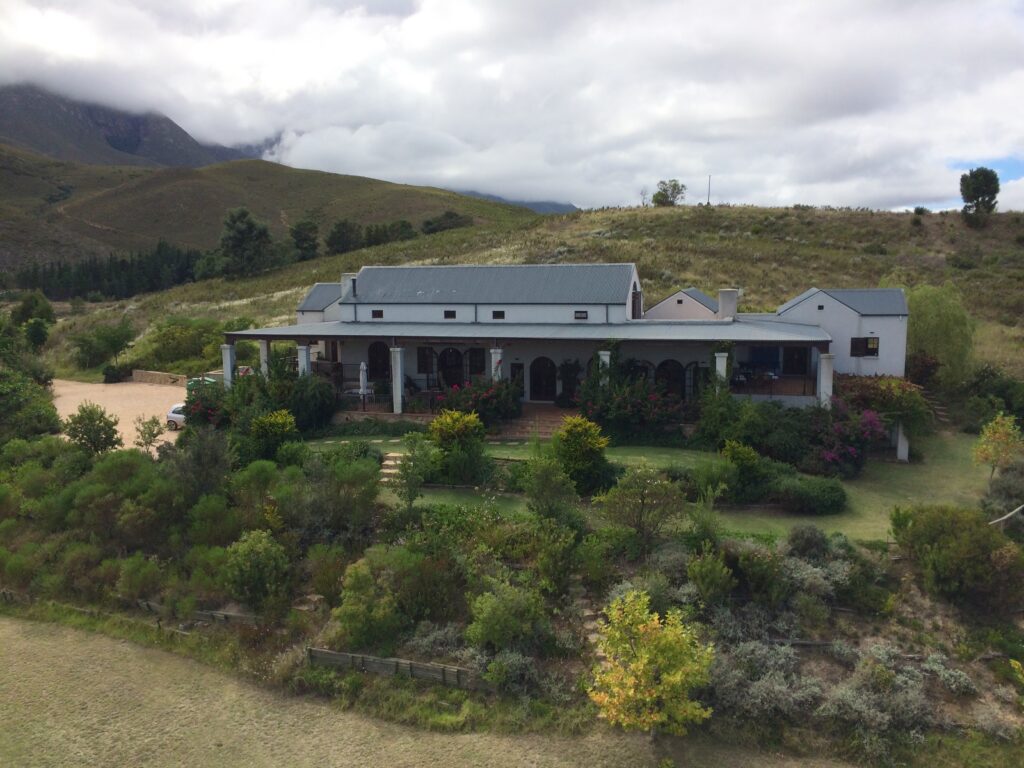
That’s when things got real. ‘In order to stay, we either needed to get a job or start a business,’ she explains. Cape Town’s TV production industry was booming at the time, and she had the perfect credentials. So what did she do? She combined her remaining savings from her abortive TV career with the inheritance she received from her father and bought a derelict dairy farm in the remote region of Greyton. And then, with no formal training, no contacts and no reputation, she decided to plant vines and make wine. In a region better known for apples, with no other vineyards nearby – or, indeed, any winery within 50km. ‘The older I get, the less sense the story makes,’ she says.
She was, she admits, a touch ‘idealistic’ but maintains that her ambitions at the time were modest. ‘I just wanted to create a business whereby I could stay in South Africa and raise my children.’ She would do that alone – her husband left two years after the first vines went into the ground, something which further shocked the locals.
It was one of the first opportunities she had to give up. But a pep talk from legendary Cape winemaker Peter Finlayson persuaded her otherwise. ‘He told me how his mother had run their family farm alone during the Second World War, and what a badass she was.’ He didn’t use the same term to describe O’Keefe, but, she recalls, ‘He told me he felt I was a woman of metal, and if anyone could do this, it was me.’
O’Keefe had undertaken ‘a bunch of detailed terroir studies’ after purchasing Lismore (she had kept the original, 1830s Gaelic name of the farm). Surrounded by mountains, Greyton is decidedly cool-climate – too cool for the likes of Cabernet Sauvignon. She also ignored the advice to plant Sauvignon Blanc, which was all the rage at the time. Instead, she opted for Chardonnay. And although the Swartland Revolution hadn’t yet happened, she sensed similarities to the Northern Rhône, leading her to plant Syrah and Viognier. It was this that would give her her USP.
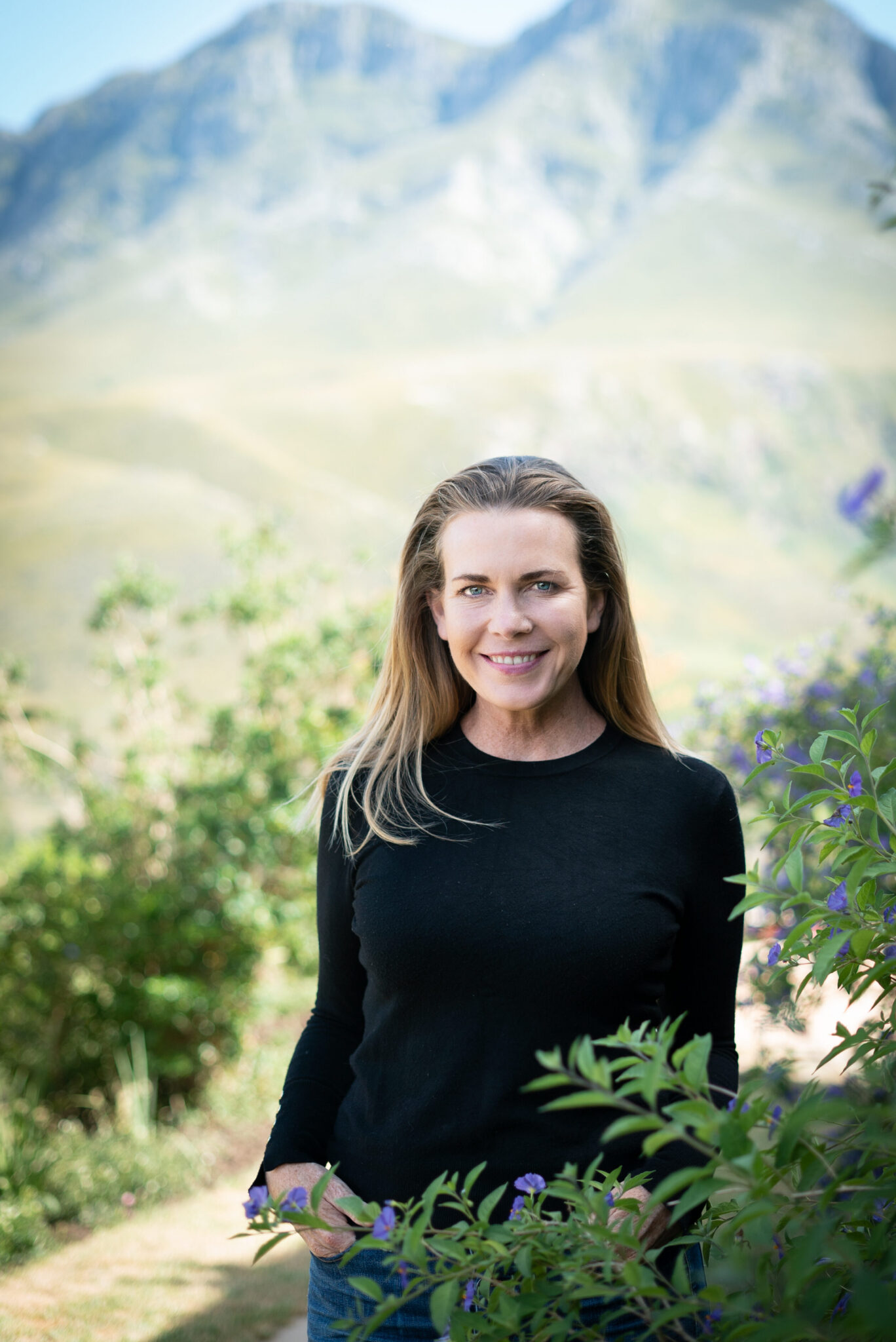
Though she claims she ‘didn’t really know what I was doing’, a strong grounding in chemistry and sciences gave her a natural inclination towards winemaking. Limited budgets dictated a relatively primitive approach, which naturally informed the style of the wines. ‘Originally, all I had was a basket press,’ she says, ‘so it was super-oxidative handling of the juice that resulted in high-risk, Old World-style wines. By accident I was creating a Burgundian Chardonnay!’
She gradually came to realise that she might just be in the right place at the right time – a time when producers were keen to explore more diverse terroir, particularly in more extreme, cool-climate areas. By 2009, Greyton had been made a ward (the South African equivalent of an appellation), solely because of the unique qualities of the Lismore wines. Even so, the journey was far from plain sailing. ‘I tell the romantic version, but it was hard along the way. Really, really hard. There were many years where anyone who cared about me wished I would just give up.’ Friends told her to ‘manifest’ a new life, and she put the property on the market in 2010, ‘but it just wasn’t willing to release me. I could never see my life beyond the farm.’
A breakthrough moment came in 2012, when, while watching her son perform in the school play, she received a text message from Peter-Allan Finlayson [winemaker at Crystallum, and son of Peter] telling her that her 2011 Chardonnay and Viognier had been highly rated by the critic Neal Martin, at the time Robert Parker’s man in South Africa. ‘That exceeded any expectation that I had ever set out,’ she recalls. ‘I sat in the dark, watching that play, sobbing.’
Similarly enthusiastic scores followed from Tim Atkin MW, and she was on a roll. Her trajectory followed that of the new-wave South Africa. ‘By the time of 2015 Cape Wine [the country’s major wine trade show], the excitement around the whole of South Africa was very real – and I was right in the middle of it.’ Armed with an array of scores and favourable write-ups, she secured funding from her bank to plant more vines and build what she calls ‘a proper cellar’ to take Lismore to the next stage.
By 2019, she was making 75,000 bottles a year, and was inducted to the Cape Winemakers’ Guild on what she says was the proudest day of her career. ‘I never imagined I would have success and respect from my colleagues like that.’ In December that year, she opened a tasting room in the town just below the winery. Life was rosy.
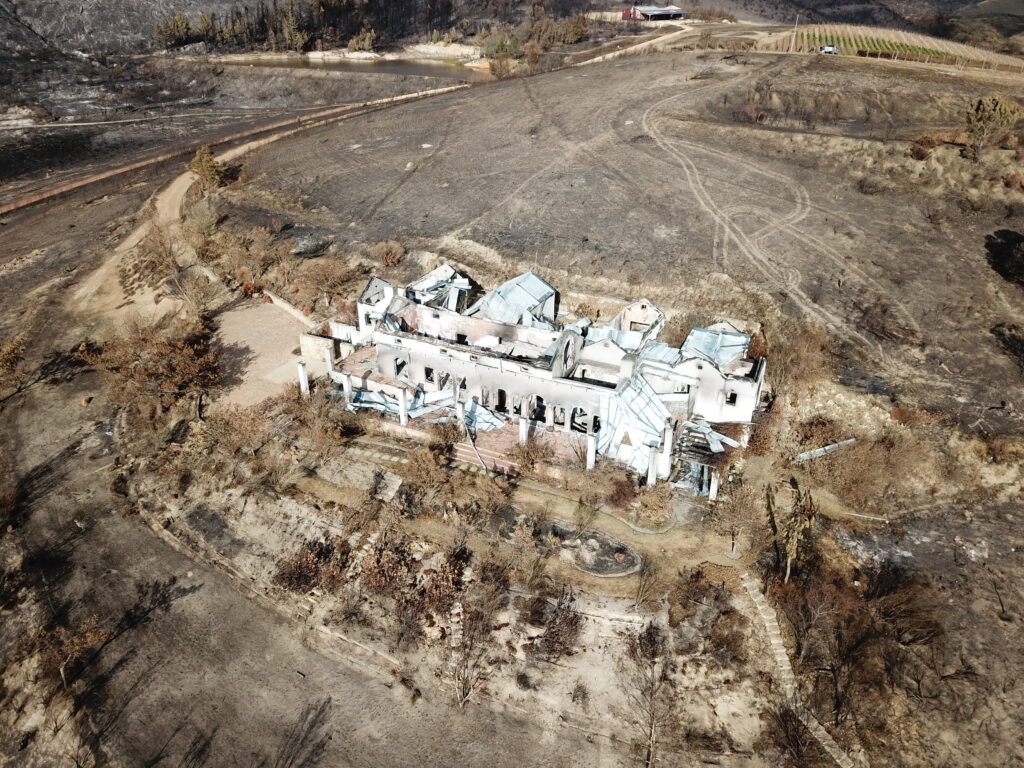
Then, four days later, within a matter of hours, ‘my entire life was gone’. A wildfire had come down the mountain, next to the house, though at first it didn’t seem unduly threatening. ‘My cellarhand and I were trying to save the cellar when, all of a sudden, a tidal wave of fire crashed down on our heads. One minute it was over there and the next minute we were engulfed.’
Desperately trying to locate her staff, she drove back through the fire to the house to try and find them, before eventually escaping. ‘It felt like the car was melting and my tyres were deflating underneath me,’ she says. At one stage, she feared for her life. ‘My father died in a plane crash, and when I was driving through the fire, I basically felt like I was about to die too. I just asked God to take care of the boys.’
With the exception of her Great Dane, everyone got out safely, but by the time the fire had passed, O’Keefe had lost her house, her winery, the entire 2019 vintage in barrel (her turnover for a year and a half), the majority of the 2020 vintage on the vine (‘my best crop in 20 years’), and 40% of the vineyard.
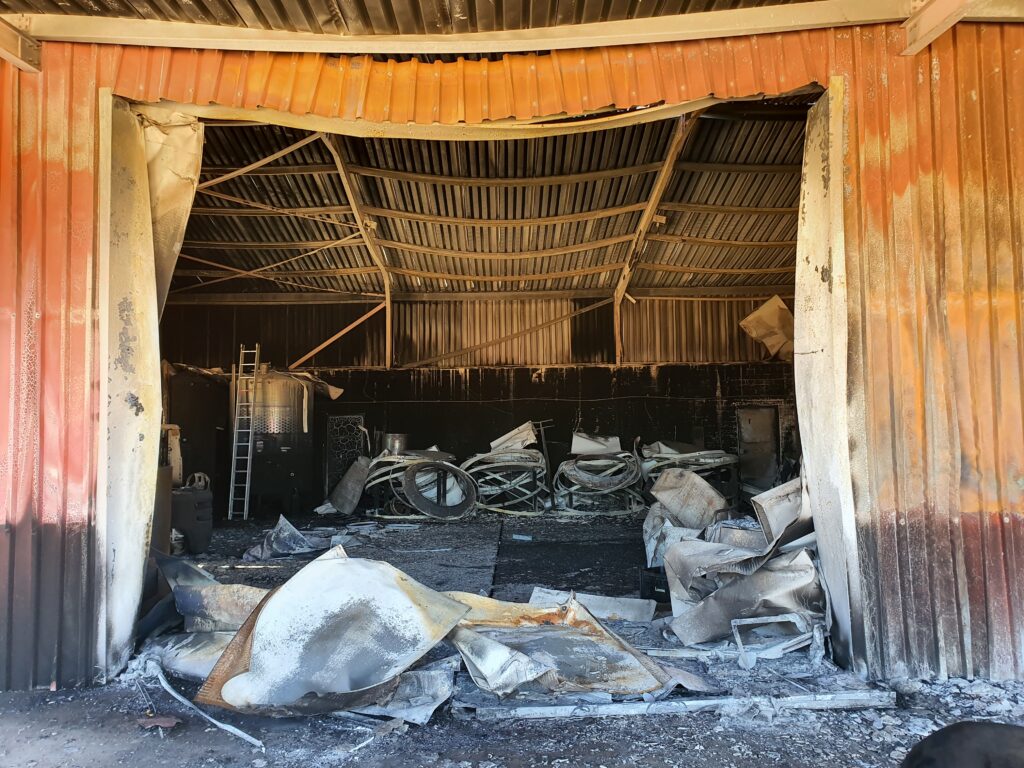
A few days later, her banker called. The same banker who had secured the funds for her expansion, and who had been with her since the beginning. ‘He was crying. He was so devastated. But then very quickly, he turned and he said, “Listen, your debt-to-asset ratio just went upside down, and I’m going to be penalised for that, so I need to know what your plan is.”’
She spent that Christmas with no business, no home, and seemingly no hope. To make matters worse, in early 2020, lockdown saw the South African government ban domestic wine sales, denying her a potential income from her remaining stock. Amid something of a siege mentality, the industry rallied round. Various producers, including Mullineux and Reyneke, donated grapes; Radford Dale and others provided winery space. Working out of four different cellars and driving thousands of kilometres during harvest, she managed to produce a few 2020 wines.
Then, the recovery began. The payout for her destroyed, unbottled 2019 wines amount to less than $1 a bottle. She was under-insured on the cellar, but worked with the bank to take the insurance money, pay the debt and refinance. A trickier issue was the house, but after a drawn-out legal saga, that was eventually rebuilt too. Then she realised she was also liable for the demolition of the two dead forests adjoining the property.
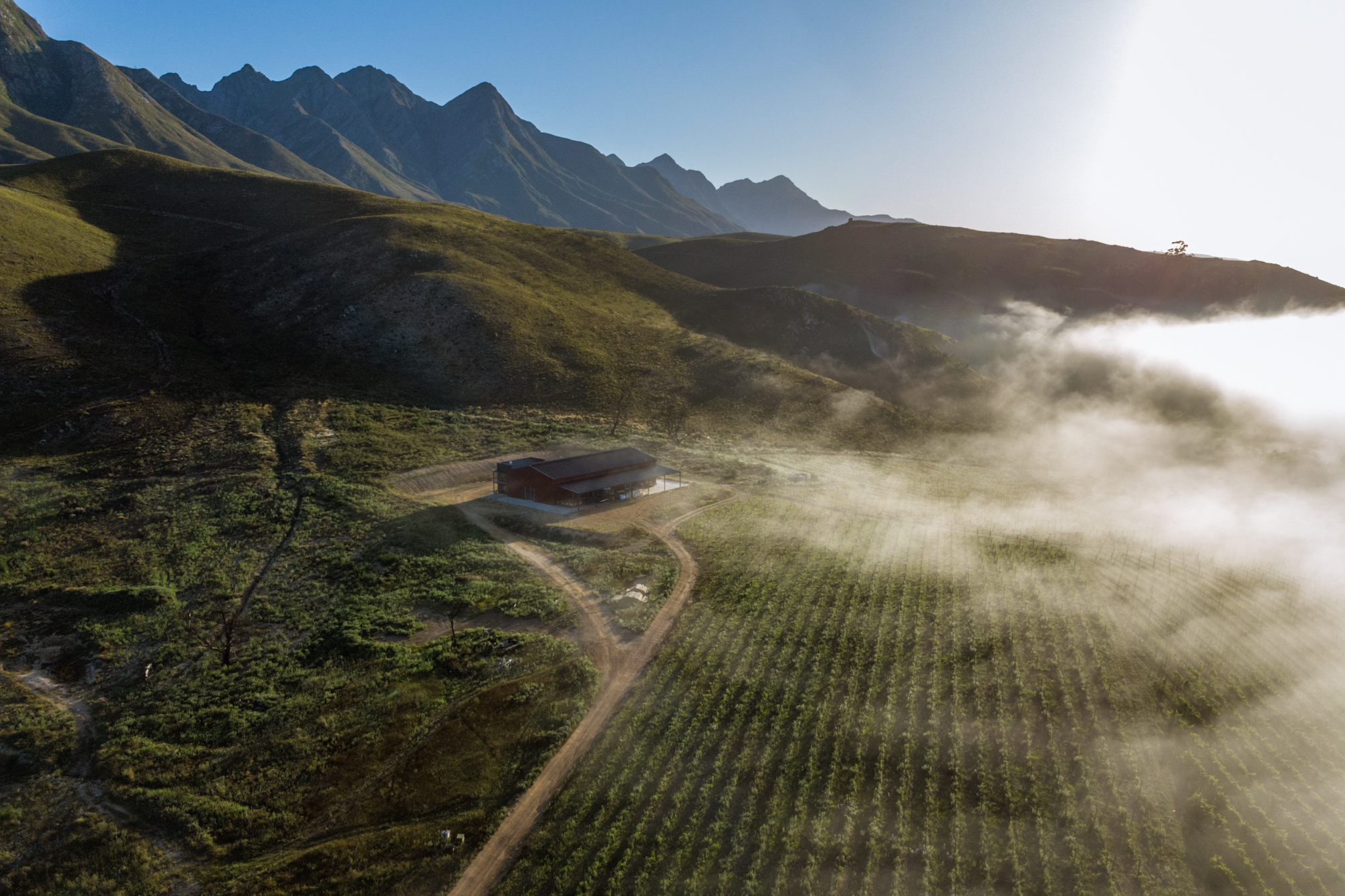
Despite it all, O’Keefe decided to continue. Around 60% of the vineyard had survived, and that was enough to persuade her. ‘I would never have re-started from zero,’ she says. ‘Without the vineyards, there is no Lismore. But having some vineyards gave me hope.’
The biggest casualty had been the Estate Reserve Syrah vines – the very vines responsible for producing what had been crowned Neal Martin’s Red Wine of the Year a week before the fire. She replanted six hectares of Syrah, as well as some Chardonnay and Viognier – ‘but the Viognier hasn’t taken and doesn’t want to be there’. She then cobbled together some second-hand equipment for the rebuilt cellar, and, in 2021 made some ‘stellar’ wines, said a wowed Tim Atkin. ‘It’s hard to describe, let alone understand, the strength of will it takes to survive something like this,’ said the veteran critic.
‘It’s true, I could have walked away,’ says O’Keefe. But I really, really love what I do. I wake up in the morning, wanting to make wine, thinking about wine, talking about wine. It’s what makes me happy. It gives me so much purpose. It makes me feel fulfilled. And ultimately, I can’t imagine not doing it. The generosity and love I experienced amazed me. And ultimately, the fire showed me that this was my destiny.’ She pauses before adding a footnote. ‘But I don’t want to be defined by it.’
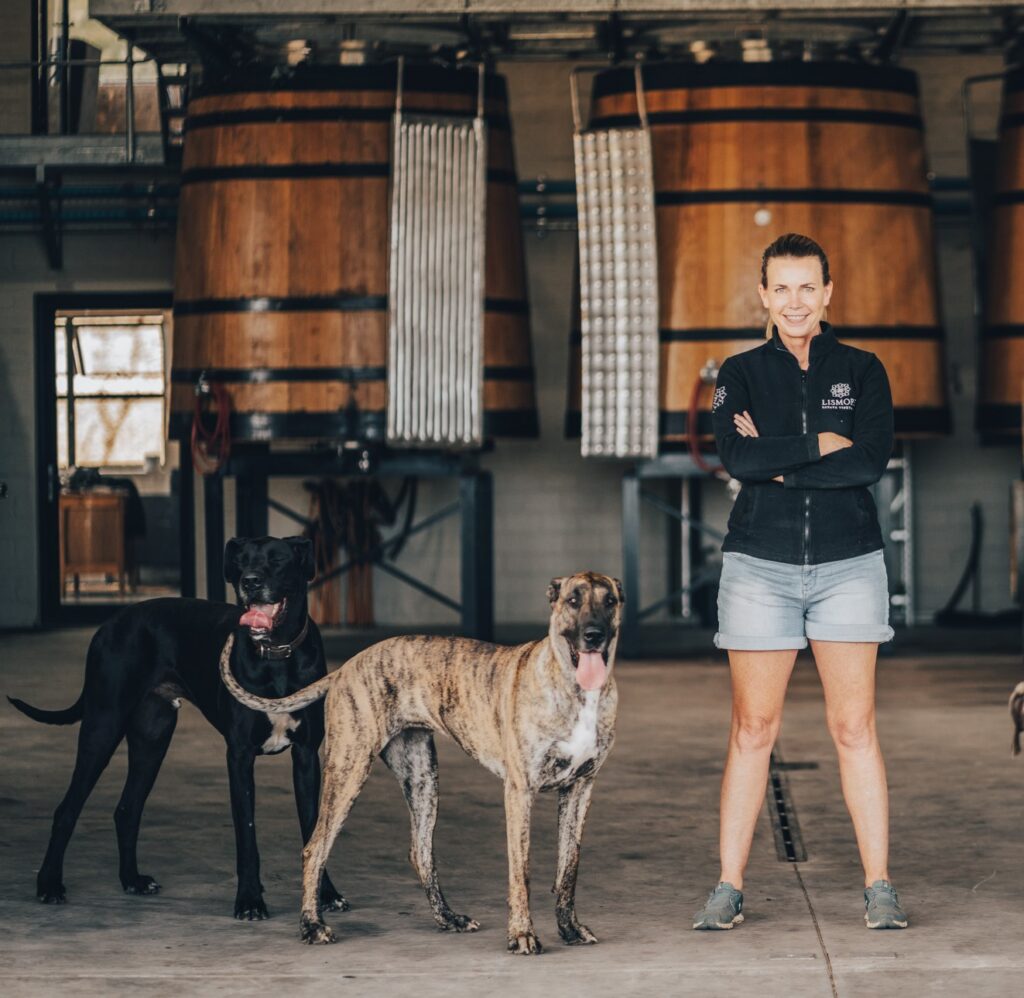
Today, O’Keefe is making 120,000 bottles a year, with the additional output coming via purchased fruit (largely from Elgin) to make up for the financial shortfall. The 2023 and 2024 wines gained a string of high 90s from Atkin and Martin, with the latter lauding the ‘stunning delineation, real depth and minerality’ of the ’23 Reserve Chardonnay and the former calling the ‘24 ‘the best release of this wine yet’.
In 2024, O’Keefe was made the chair of the Cape Winemakers’ Guild, the industry association she had been thrilled merely to be inducted into five years earlier. It was, she says, a ‘huge moment’. ‘The Guild had a reputation as something of an old boys club, so to be a woman, and an outsider, following the likes of Norma Ratcliffe [of Warwick] and Andrea Mullineux, was amazing.’
It strikes me that, despite such an accolade, she still doesn’t fully appreciate the esteem in which she is held, so I ask her if she realises what an inspiration she has been to her peers. For the first time in our 90-minute conversation, she doesn’t immediately answer. And then the tears come. When she finally composes herself, the response is typically considered. ‘I’m grateful if they see me that way. It’s just so overwhelming. But they would have been fine without me.’ And at that stage, I have to demur. Because the whole of the wine world would be a much poorer place without the remarkable Samantha O’Keefe.
Not a 67 Pall Mall Member? Sign up to receive a monthly edit of The Back Label by filling out your details below
WHAT
I’VE
LEARNED
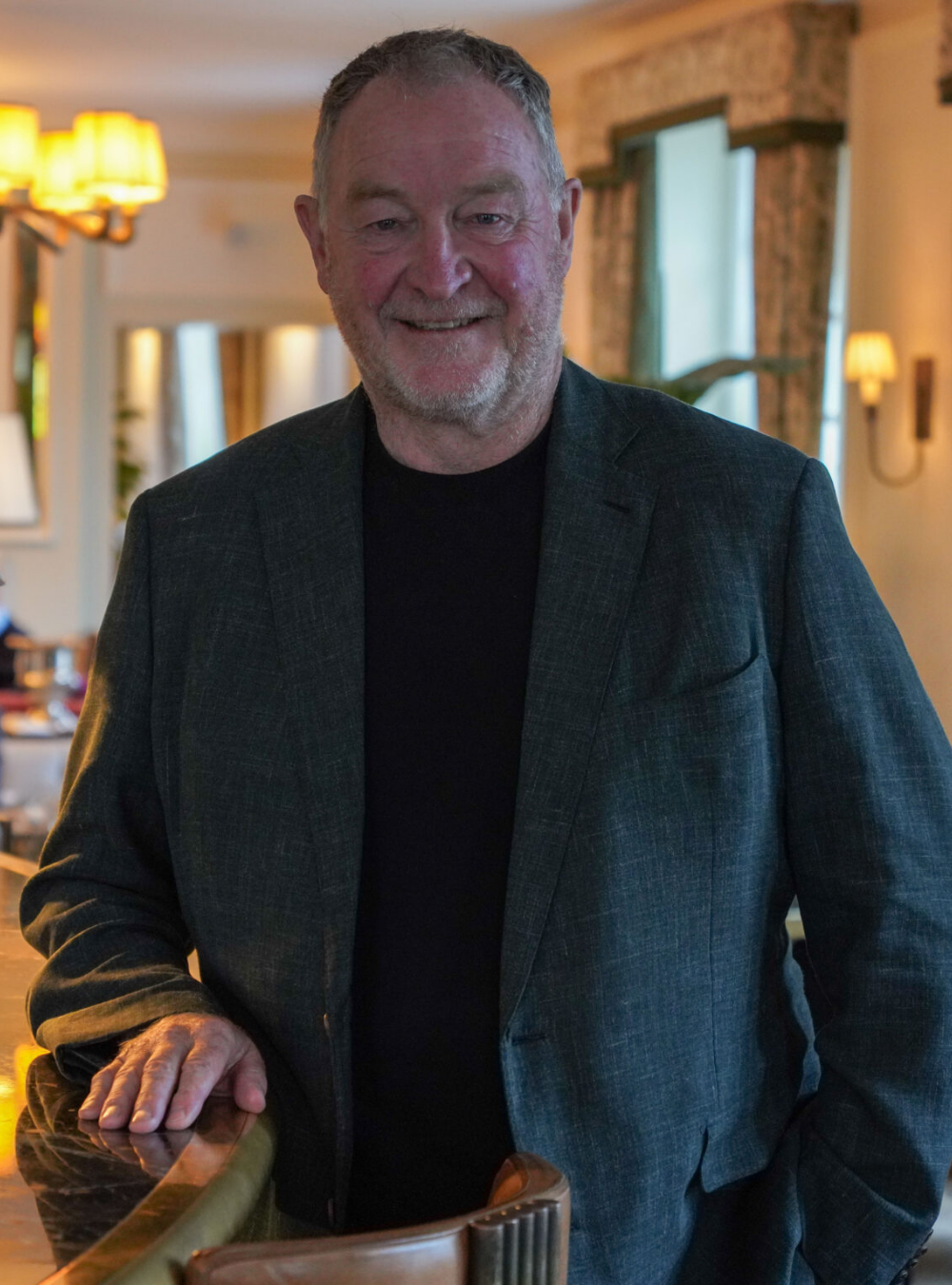
Steve Smith MW, Pyramid Valley
MEET
THE
SOMM
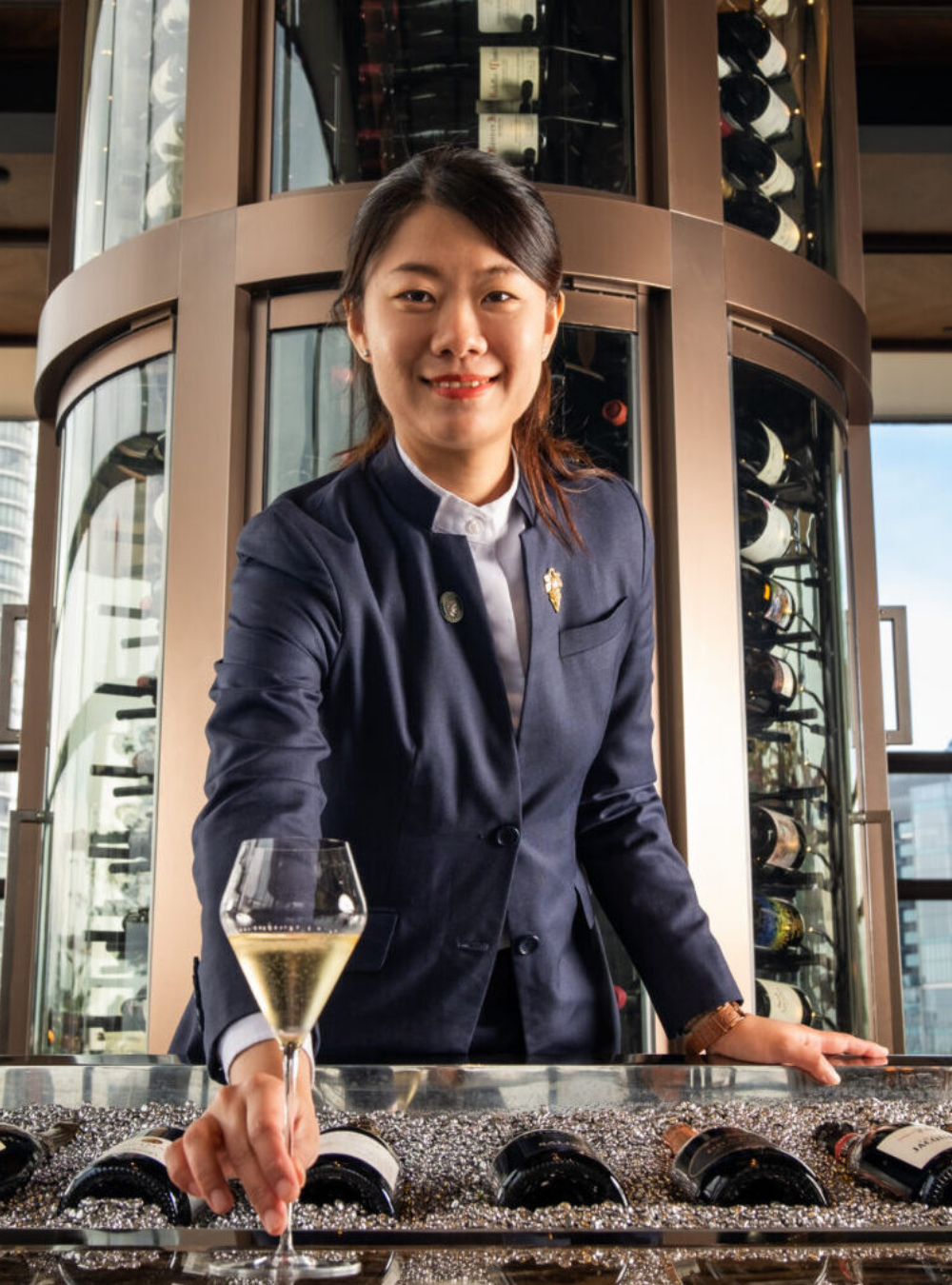
Shirley Tan
TWO
MINUTES
WITH
Alice Tétienne, Champagne Henriot