


ON THE ROAD | Richard Hemming MW in Margaret River
12 December 2025
Our Head of Wine for Asia Pacific made the trek from Singapore to Western Australia last month to join an enthusiastic crowd for a series of comparative tastings pitting Australia’s top wines against counterparts from around the world. Here, he recounts the highlights
Lined up at long tables inside high-roofed winery sheds, flanked by wooden barrels and stainless-steel tanks, dozens of participants taste through rows of wines in silence. The only noise is slurping, spitting and the odd clink of a glass, echoing around the room like wind chimes. Even the faintest of whispers is abruptly shushed, while deeper discussions of any kind are saved for later.
It’s a far cry from the revelry you might typically associate with the Australian wine scene. But once a year, the producers of Margaret River, Western Australia’s famous fine-wine paradise, gather wine lovers and trade from far and wide to participate in a grand tradition of comparative blind tastings, pitting the great wines of Australia against their counterparts from around the world.
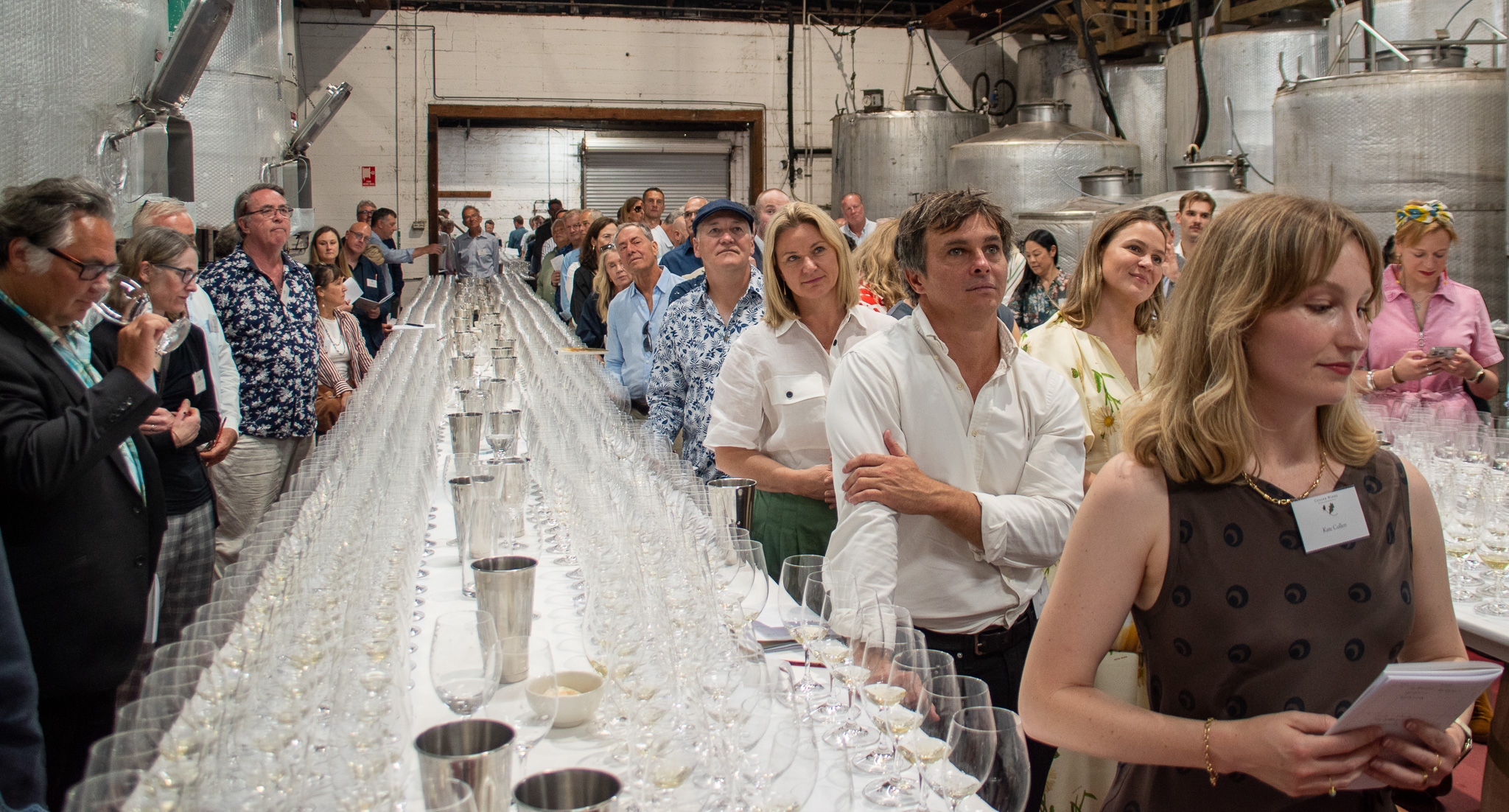
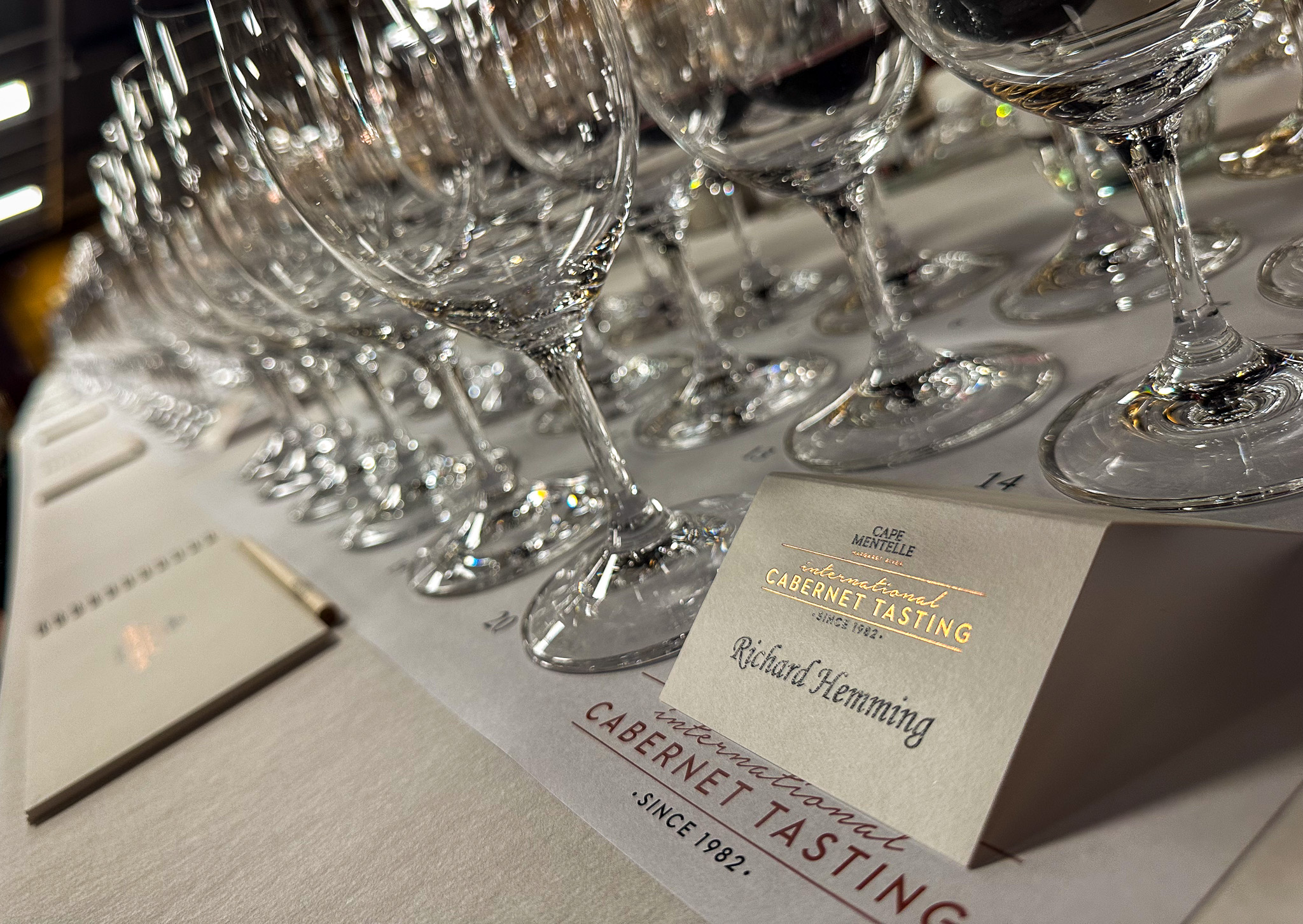
Three such tastings take place on successive days: the Howard Park Global Sparkling Tasting; the Cape Mentelle International Cabernet Tasting; and the Cullen International Chardonnay Tasting – and last month, I was there to join the silence. Blind tastings in this format allow an assessment of quality as objectively as possible. And that quality is palpable: among the sparkling wines are Bollinger’s flagship late-disgorged RD from 2008; English upstart The Trouble With Dreams 2020 from Sugrue South Downs; and over-achievers from Roederer Estate in California and Ca’ del Bosco in Franciacorta.
The Cabernet lineup includes knee-wobblers from Sassicaia, Lafite-Rothschild and Spottswoode as well as a wildcard from Lost Mountain – previously known as RdV Vineyard – in Virginia, whose 2022 was my joint highest-score of the flight. Meanwhile, the Chardonnays take in a Chablis grand cru from Christian Moreau, a premier cru Meursault from Fabien Coche, and Kumeu River’s legendary Maté’s Vineyard. Up against these globetrotters are toppermost Australian challengers: fizz from Howard Park, Pirie and House of Arras; Cabernets from Moss Wood, Wendouree and Cape Mentelle; and Chardonnays from Giaconda, Tolpuddle and Cullen.
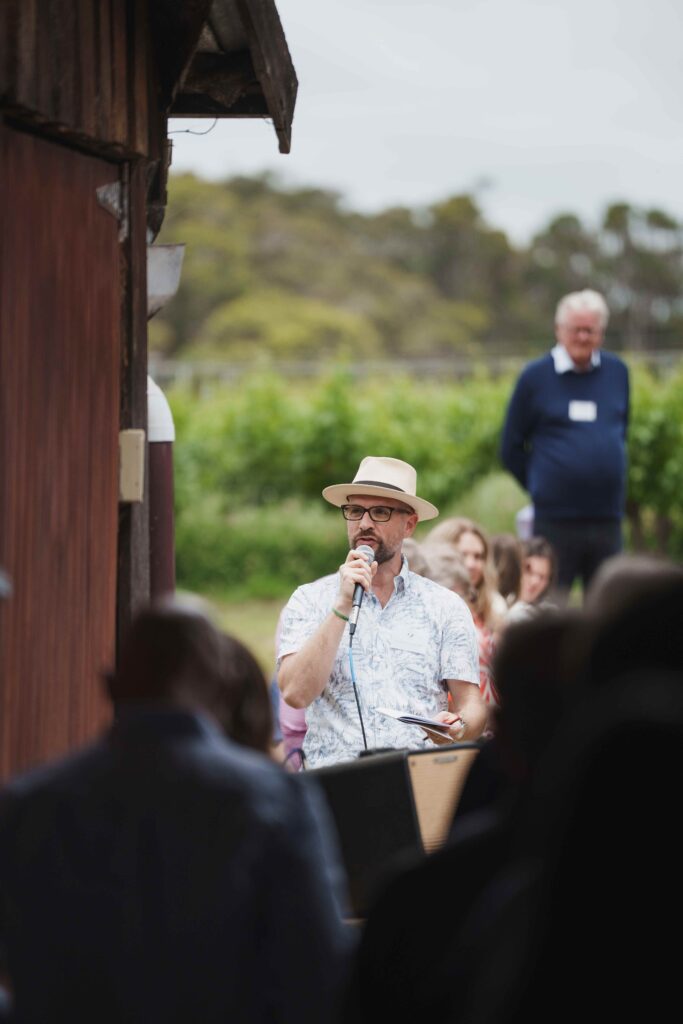
The wines – around 24 per tasting – are split into three flights, or brackets, to use the Australian term. After each one, tasters gather outside the winery buildings in the spring sunshine, and after the silence, a lively discussion ensues. Comments on each bracket are given by a pair of guest speakers – among the notable Australian critics present were Nick Ryan, Huon Hooke and Andrew Caillard MW. I was invited to share my thoughts on a bracket of Chardonnays and a bracket of sparklings. Finally, the larrikin Aussie spirit comes to the fore. My words on the sparkling wines coincided with the first morning of the Ashes Test Match in Perth, where the England team were undergoing a chronic capitulation. This did not go unmentioned. But the bantering is affectionate – and, more importantly than the humans, the wines are given due respect.
Forty years ago, the objective of these tastings was to benchmark acknowledged classics from around the world against what were then Australian upstarts. Today, the Aussies’ reputation has been repeatedly proven, so that rivalry has become somewhat tempered – but the temptation to identify each wine remains irresistible. For the Chardonnay and Cabernets, the European examples were reassuringly obvious. In the former category, their identity was betrayed not so much by terroir as by closure: the difference in oxidative development for the wines under cork was apparent. Whereas for the Cabernets, a certain savoury character (often blamed on Brettanomyces, the yeast that can cause farmyard-type aromas) was a reliable giveaway.
With the sparkling wines, it was much harder to discern which came from Champagne – for me, at least. The methods of production which mark the best fizz can be repeated anywhere, and pockets of cool-climate Chardonnay and Pinot Noir are now well-established worldwide. My top-scoring fizz were from Tasmania (Pirie Late Disgorged 2011), Franciacorta (Ca’ del Bosco Cuvée Prestige Edizione 47) and California’s Anderson Valley (Roederer Estate L’Ermitage 2019). Among the Cabernets – all from the 2022 vintage – I most enjoyed Ornellaia, Château Léoville Las Cases, Château d’Issan and Yarra Yering Carrodus. Whereas for the 2021 Chardonnays, my best bottles were Tolpuddle, Cullen Kevin John and Oakridge 864 Funder & Diamond Drive Block.
If the original objective was to benchmark Australia’s best, today these blind tastings are a celebration of wine’s ever-improving quality around the world. There are few better places than Margaret River to witness that quality first hand – it’s worth breaking the silence.
Not a 67 Pall Mall Member? Sign up to receive a monthly selection of articles from The Back Label by filling out your details below
TWO
MINUTES
WITH
Benjamin Leroux, Beaune
WHAT
I’VE
LEARNED
Laurent Ponsot
UNDER
THE
SURFACE
En Primeur – Is Burgundy going the same way as Bordeaux?